

Key Takeaways
- Ownership: You own your profile and content as digital assets, not the platform.
- Portability: Your social graph (followers/following) can move between different apps.
- Monetization: Creators earn through tokens and NFTs rather than relying on ad-revenue splits.
- Governance: Decisions are often made by the community via DAOs instead of a CEO.
The Core Difference: Who Actually Owns Your Data?
To understand Web3 social, you first have to look at the problem it's trying to fix. In the Web2 era, companies like Meta or ByteDance act as gatekeepers. They provide a "free" service in exchange for your data, which they then sell to advertisers. They control the algorithm, they decide what gets censored, and they can delete your account at any moment. Web3 flips this script by using a Blockchain is a distributed ledger that records transactions and data across a network of computers, making it nearly impossible to alter or delete without consensus. When you post on a decentralized network, that data isn't stored on a single company server. Instead, it lives on a public blockchain or a decentralized storage system like IPFS (InterPlanetary File System), which ensures your content exists independently of any single application. This means if you don't like the interface or the rules of one app, you can simply log into a different app using the same wallet, and all your data is still there. You aren't a "user" in the sense of being a product; you are an owner of your digital identity.How Web3 Social Works Technically
It might sound like magic, but it's actually a layer cake of different technologies. Most decentralized platforms don't put every single "Like" or "Comment" directly on the main Ethereum chain because it would be too slow and expensive. Instead, they use a combination of tools:- Layer 2 Solutions: Platforms often run on networks like Polygon, which provides faster transactions and lower "gas fees" (the cost to process a transaction) than the main Ethereum network.
- Smart Contracts: These are self-executing contracts with the terms written into code. They handle things like automatically paying a creator when someone "mirrors" their post or managing how a community votes on a new feature.
- Social Graphs: This is the map of who you follow and who follows you. In Web3, the social graph is often stored as an on-chain entity. For example, Lens Protocol is a decentralized social graph that allows users to own their profiles and followers as NFTs.
| Feature | Web2 (Traditional) | Web3 (Decentralized) |
|---|---|---|
| Data Ownership | Company-owned | User-owned (via Wallet) |
| Content Control | Centralized moderation/censorship | Community-led or algorithmic transparency |
| Monetization | Ad-revenue sharing (Company takes a cut) | Direct token payments and NFT sales |
| Account Portability | Locked to one platform | Portable across different apps |
| Governance | Executive board decisions | DAO (Token holder voting) |
New Ways for Creators to Make Money
For most of us, making money on social media means hoping the algorithm picks up your video and then taking a small percentage of ad revenue. In Web3, the economy is shifted. Creators can use Non-Fungible Tokens (NFTs) to turn a viral post or a piece of digital art into a collectible asset that can be bought, sold, or leased. Take a look at "mirroring." In some Web3 ecosystems, if you share someone else's content and that shared version becomes popular or is purchased, a smart contract can automatically split the revenue between the original creator and the person who shared it. This creates a natural incentive for people to promote high-quality content without needing a paid marketing budget. Furthermore, many platforms introduce social tokens. A creator can launch their own token, which fans buy to get access to private chats, exclusive content, or a vote on what the creator should do next. This turns a following into a literal economy where the fans have a financial stake in the creator's success.
Community Power and the DAO Model
In a traditional company, a small group of executives decides how the app works. If they decide to change the algorithm to favor short-form video over text, you just have to deal with it. Web3 introduces the DAO is a Decentralized Autonomous Organization, where rules are encoded in smart contracts and decisions are made via member voting. In a social DAO, the users who hold the platform's tokens can vote on everything from moderation policies to how the treasury funds are spent. It moves the platform from a "dictatorship" to a "cooperative." While this sounds great, it does come with a challenge: getting thousands of people to agree on a single direction is much slower than one CEO making a decision in five minutes.The Elephant in the Room: Why Isn't Everyone Using It?
If the benefits are so clear, why are we still scrolling through Instagram and X (formerly Twitter)? The reality is that the user experience (UX) is currently a major barrier. First, there's the "wallet problem." To join a Web3 social network, you can't just sign up with an email and password. You usually need a cryptocurrency wallet. For a tech-savvy person, this is easy. For a regular person, managing a seed phrase and worrying about losing access to their funds is terrifying. Many users have reported spending hours just trying to set up their accounts, which kills the "instant gratification" feel of social media. Then there are the costs. While networks like Polygon have brought fees down to pennies, the concept of "gas fees"-paying a small amount of money just to post a status update-is a psychological hurdle for people used to free apps. Finally, there is the "network effect." Social media is only valuable if your friends are on it. It's hard to convince a million people to move to a new platform if only ten of their friends are there. This is the "chicken-and-egg" problem that every new social network faces, but it's amplified in Web3 because the onboarding is harder.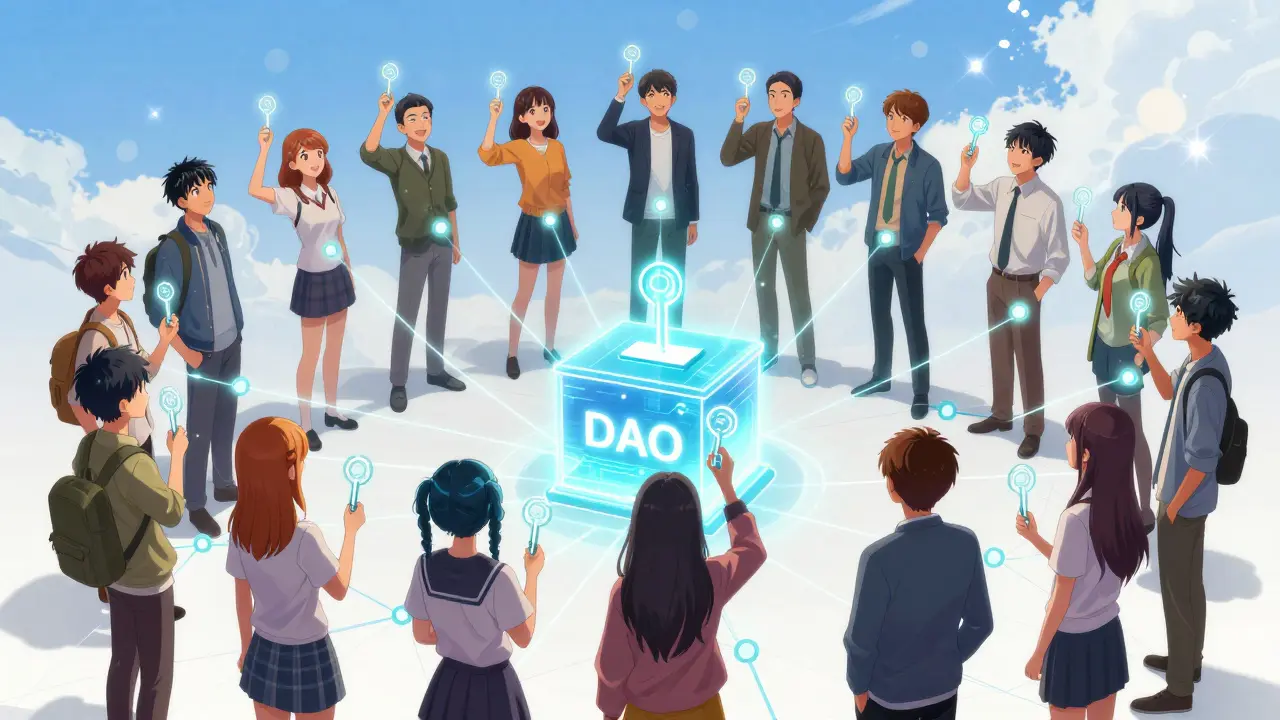
Looking Ahead: The Hybrid Future
We are likely moving toward a world where the line between Web2 and Web3 blurs. We're already seeing this with platforms like Instagram integrating NFT displays. The goal for the next few years isn't necessarily to delete every centralized app, but to integrate the ownership benefits of Web3 into the seamless experience of Web2. Imagine a future where you have a "Universal Social ID." You use it to log into a professional network, a gaming community, and a photo-sharing app. Each app provides a different interface, but the data-your friends, your posts, your reputation-belongs to you. If one app becomes too intrusive with ads or changes its rules in a way you hate, you simply disconnect your ID and move to a competitor, taking your entire digital life with you.Do I need to buy cryptocurrency to use Web3 social media?
Not necessarily, but you will need a crypto wallet to manage your identity and ownership. While some platforms are working on "gasless" experiences where the app pays the transaction fees for you, most currently require a small amount of a specific token (like MATIC on Polygon) to perform actions on the blockchain.
Is Web3 social media more private than Web2?
It depends on what you mean by privacy. Because blockchains are public ledgers, your transaction history and the fact that you own certain assets are public. However, you have more control over who accesses your personal data and you aren't being tracked by a central company to build an advertising profile of you.
Can my content be deleted on a decentralized network?
Generally, no. Once data is written to a public blockchain or stored on IPFS, it is permanent and tamper-proof. This is why Web3 is often called "censorship-resistant." While an individual app might choose to hide your content from its interface, the content itself still exists on the network.
What is a social graph and why is it important in Web3?
A social graph is the map of all your relationships online-who you follow and who follows you. In Web2, this graph is owned by the platform. In Web3, the graph is stored on the blockchain, meaning you own the map. This allows you to take your entire network of followers to any application that plugs into that same protocol.
How do DAOs actually manage social media platforms?
DAOs use governance tokens to give users voting power. If the community wants to change a rule about content moderation or decide how to spend the platform's treasury, a proposal is made. Token holders then vote on the proposal. If it passes, the smart contract automatically executes the change or releases the funds.
Next Steps for Getting Started
If you're curious about experiencing this firsthand, don't jump in by buying thousands of dollars in tokens. Instead, follow this path:- Set up a non-custodial wallet: Try a user-friendly option like MetaMask or Coinbase Wallet. This is your "passport" to the Web3 world.
- Explore a Protocol: Look into Lens Protocol or Farcaster. These aren't just "apps" but ecosystems where multiple different interfaces can access the same data.
- Start Small: Try minting a post as an NFT or following a few creators. Get a feel for how "gas fees" work and how different it feels to own your profile.
- Join a Community: Look for a DAO related to your interests. Participate in a vote or a forum discussion to see how community governance actually works in practice.
Michelle Stanish
Sounds like just another way to lose money.
Nishant Goyal
This is a great breakdown of the tech. Very helpful for beginners.
Saurav Bhattarai
Oh wow, a "revolutionary" way to pay for the privilege of posting a status update. Truly the pinnacle of human innovation. I'm sure we're all just waiting for the next great scam to arrive in a decentralized wrapper because that's exactly what the world needs right now. Absolute genius.
Adedamola Oyebo
Layer 2 is crucial!! Without scaling, Web3 is dead!!
Ian Chait
The so-called "decentralization" is just a front for new elites to control the ledger. It's all about the shadow gov and the globalist agenda to track every single micro-transaction. If you think a DAO is any differnt from a corporate board, you've been brainwashed by the marketing. Check the whitepaper on the real liquidity traps before you dive in.
Jeff Barlett
Wait, so you're telling me I can't even have a simple password anymore? This is absolute madness. Why are we making things harder for the sake of some imaginary ownership? I'll stick to my centralized apps where I can actually remember how to log in without a 24-word seed phrase written on a piece of paper in my sock drawer. Give me a break!
Adam Mann
I really love the idea of creators actually owning their work for once. It's just so wonderful to think that a small artist in a different part of the world could find a way to sustain themselves without some giant corporation taking a massive cut of every single penny they earn. I can see this bringing people together from all different backgrounds and cultures because the value is based on the art and the community rather than a corporate algorithm. It's a bit scary at first, sure, but the potential for global inclusivity is just heartwarming if you think about it. We should all try to be more welcoming to the people trying to build this new world, even if they aren't tech experts yet, because that's how we grow together as a global society.
John and Lauren Busch
Gas fees for a post. Totally reasonable.
Gillian Kent
i think the idea of porting followers is lavely but i bet most people dont even know what a wallet is yet. its kind of a mess for normies but the goal is good i guess.
Alex Long
Too long. Too much jargon. Just another crypto hype piece. This is all garbage anyway.
Trudy Morse
Ownership is just a social construct anyway. But logically, the social graph is the real prize here.
Yuhan Mo
The implementation of a decentralized social graph via an NFT-based profile is a fascinating paradigm shift for the current UX landscape. I appreciate the technical granularity provided here regarding Layer 2 solutions and the utility of the Lens Protocol.
Gaurav Undirwade
It is deeply concerning that individuals believe a simple change in hosting will solve the moral decay of social interaction. One must ask if the community is actually capable of self-governance, or if they will merely replicate the same vices of the centralized systems they claim to despise. It is a matter of character, not code.
Andrew Southgate
If you are struggling with the onboarding process, I highly recommend starting with a browser-based wallet first before moving to a hardware solution. It really helps to understand the flow of transactions without the initial fear of losing everything. The concept of mirroring is particularly exciting because it turns every user into a potential curator who is rewarded for their taste and discovery, which is a far more sustainable model than the current attention-economy where only the loudest voices get noticed. Once you get past the initial hump of setting up your identity, the freedom of knowing no one can arbitrarily ban you for a misunderstood comment is incredibly liberating and empowering for everyone involved in the conversation.
Robert Preston
Let's be clear: a DAO is only as good as its participants. If you have a few whales holding all the tokens, you've just replaced a CEO with a group of rich investors. We need to discuss quadratic voting or other mechanisms to ensure true decentralization.
Evan Iacoboni
What happens to the content if the IPFS nodes hosting it all go offline? Does the blockchain just point to a dead link?
Chintu Parikh
I am most profoundly excited about the prospect of direct monetization for creators! It is truly an honor to witness the shift toward a more equitable digital economy. Let us all embrace this transition with vigor and support the developers making this a reality for the global community!
Mike Kempenich
I'm definitely optimistic about this. It'll take a while to get the UX right, but the end goal of user sovereignty is definitely the right direction for the internet.