

When you hear the name PolyAlpha Finance (ALPHA), you might think it’s another promising DeFi project on Polygon. But the truth is far more unsettling. This isn’t a failed experiment or a quiet niche player-it’s a ghost town with a token ticker.
Launched on September 16, 2021, PolyAlpha Finance was supposed to be PolygonFarm’s second-layer solution for stable-yield farming. The idea? Create a token-ALPHA-that would hold its value better than its predecessor, SPADE, by using "unique and creative strategies." Sounds smart. But here’s the catch: there’s no proof those strategies ever worked. Not a single whitepaper. No GitHub repo. No team bio. No community forums. Just a token with 9,300 coins in existence and a price history that looks like a rollercoaster after a crash landing.
The Numbers Don’t Lie: A Token That Collapsed 99.86%
At its peak, ALPHA hit $274.02. That’s not a typo. One token was worth more than a used car. Today? It trades between $0.38 and $0.57, depending on which exchange you check. That’s a 99.86% drop. If you bought in at the top, you lost nearly everything. And no, this wasn’t a market-wide crash. This happened in isolation. While Bitcoin and Ethereum went through cycles, ALPHA just fell-and kept falling.
Why such a massive drop? Because the supply was artificially tiny. Only 9,300 ALPHA tokens were ever created. Compare that to Aave (over 14 million), Quickswap (over 1 billion), or even a small DeFi project like SushiSwap (over 160 million). When a token has fewer than 10,000 units in circulation, it doesn’t take much to move the price. One whale buying 1,000 tokens can spike the price. One whale selling 1,000 tokens can crash it. That’s not decentralization. That’s a rigged game.
No One Talks About It-Because There’s Nothing to Talk About
Check Reddit. Nothing. Zero threads. Zero discussions. Check Twitter. Less than 10 posts in the last 90 days. Check Trustpilot, G2, or Capterra? Empty. No reviews. No complaints. No praise. Just silence. Even DropsTab, a site that lists its price, admits: "PolyAlpha Finance is a term that is not recognized or associated with any known project or concept."
And yet, it’s still listed on Binance and Crypto.com. Why? Not because they believe in it. Because they list *everything*. These platforms don’t vet every token for legitimacy. They list it, collect trading fees, and move on. That’s not a stamp of approval. It’s a warning sign in disguise.
Where Can You Trade ALPHA? Nowhere Useful
The only place you can trade ALPHA is Quickswap-a decentralized exchange on Polygon. No other major DEX supports it. No centralized exchange (like Coinbase or Kraken) lists it. And even on Quickswap, the trading volume is near zero. Crypto.com says "N/A" for 24-hour volume. That means almost no one is buying or selling.
Trying to trade ALPHA means:
- Setting up a Polygon-compatible wallet (MetaMask, Trust Wallet, etc.)
- Buying WMATIC to pay for gas
- Connecting to Quickswap
- Searching for the ALPHA/WMATIC pair
- Praying the price doesn’t slippage by 30% on a $5 trade
And for what? To own a token with no utility, no roadmap, and no community. You can’t stake it. You can’t lend it. You can’t use it in any app. It doesn’t grant governance rights. It’s not even used to pay fees on the platform it supposedly belongs to. It’s just… there.
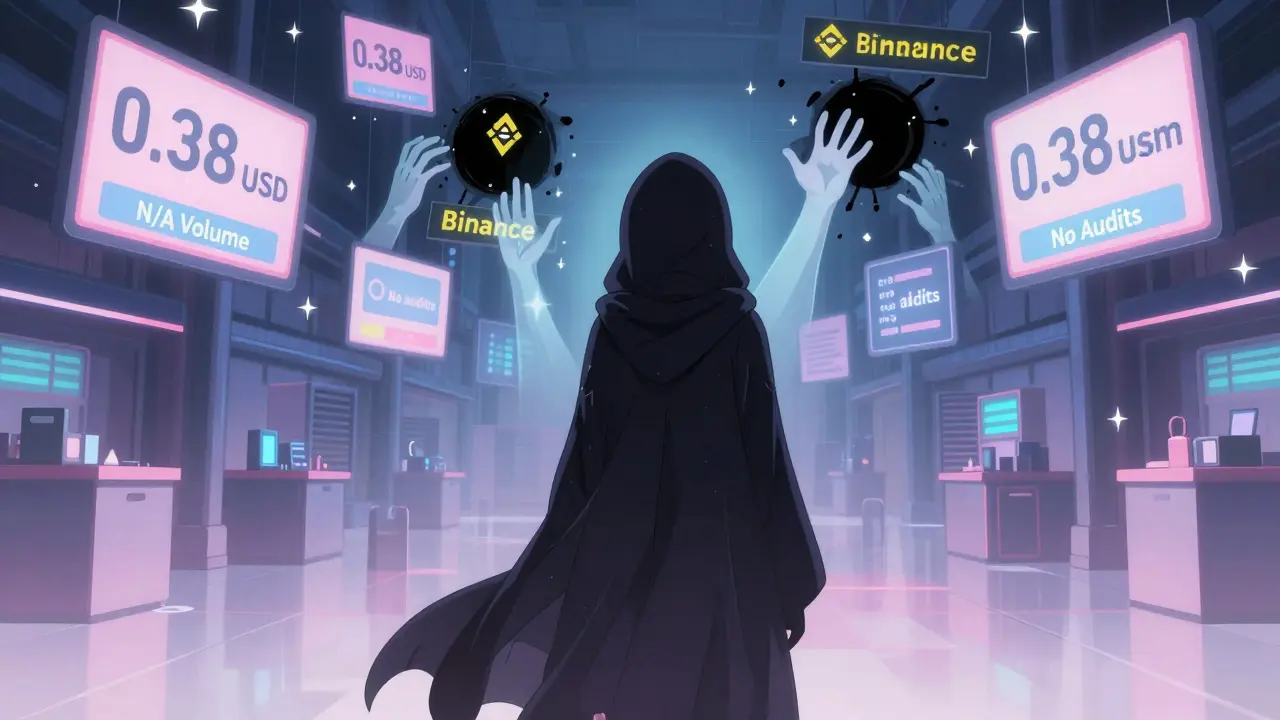
No Audits. No Transparency. No Future
Every serious DeFi project gets audited. CertiK, OpenZeppelin, Hacken-they all check the code before launch. PolyAlpha Finance? No audits. No public code. No technical documentation. Nothing. That means:
- You don’t know if the smart contract has a backdoor
- You don’t know if the devs can mint more tokens
- You don’t know if the liquidity pool can be drained
And here’s the kicker: the project hasn’t updated anything since 2022. No blog posts. No Twitter announcements. No GitHub commits. The team vanished. The website? Dead. The Discord? Empty. The Telegram? Ghosted.
There’s no future for PolyAlpha Finance because there was never a real present. It was never meant to last. It was built to pump, then dump.
Why Does This Matter? Because It Could Happen to You
PolyAlpha Finance isn’t unique. It’s a blueprint. A template for how bad actors operate in crypto. They create:
- A flashy name that sounds technical
- A token with an absurdly small supply
- A narrative about "stable yield" or "innovative farming"
- A listing on a big exchange to trick new users
- Then they vanish
This is how rug pulls happen. This is how people lose life savings. And it’s still happening every day. PolyAlpha Finance is just one example-albeit one of the most extreme.
If you see a token with:
- Under 100,000 circulating supply
- No whitepaper or GitHub
- No active community
- Price spikes over 500% in 30 days
- Only listed on one DEX
Run. Don’t look back.

What Should You Do Instead?
Don’t chase obscure tokens. Don’t get lured by high ATHs. Don’t trust listings on Binance or Crypto.com as safety signals. Instead:
- Look for projects with public code and audits
- Check if they have active Discord, Telegram, and GitHub
- See if they have real TVL (Total Value Locked) data on DefiLlama
- Read what independent analysts say-Cointelegraph, CoinGecko, Messari
- Stick to well-known protocols on Polygon: Quickswap, SushiSwap, Aave
There’s a whole ecosystem of legitimate yield farming tools on Polygon. You don’t need to gamble on a ghost.
Final Verdict: ALPHA Is a Cautionary Tale
PolyAlpha Finance (ALPHA) isn’t a crypto coin you should own. It’s not a project you should research. It’s not even a curiosity worth studying.
It’s a warning.
It shows how easily a project can be built to look real-until you dig deeper and find nothing. No code. No team. No future. Just a token with 9,300 units and a price that collapsed into dust.
If you’re thinking about buying ALPHA, ask yourself: Why would anyone sell it for $0.38 if they thought it had value? And why would anyone still hold it?
The answer? No one does. Not anymore.
Sean Logue
man i just saw this and thought it was some new yield farm. turned out it's a graveyard. wild how some of these tokens just ghost you after the pump. i lost my first 500 bucks on something like this back in 2021. never again.
Dianna Bethea
this is why i only look at projects with at least 3 months of active dev activity and real tvl on defillama. no community? no code? no audits? that's not innovation that's a trap. if you're new to crypto just stick with quickswap or aave. they're boring but they don't vanish overnight.
Phillip Marson
this is the kind of thing that makes me want to scream. people think listing on binance means it's legit. nah bro. they list garbage because it makes them money. they don't care if you lose everything. it's a casino with a blockchain logo.
Alyssa Herndon
i read this and felt so relieved i never touched alpha. sometimes the scariest thing isn't the crash... it's realizing you almost got sucked in. thank you for writing this. needed it.
Ifeanyi Uche
you think this is bad wait till you see the ones with 500k supply and fake liquidity. this is just the tip. the real rug pulls are the ones that look like they're building something. this one's just naked. no clothes. no shame.
Elana Vorspan
this is why i always check github first. if there's zero commits after launch... that's your answer. no need to overthink it. 🙃
Kenneth Genodiala
i'm genuinely shocked anyone still talks about this. it's not even a cautionary tale anymore. it's a footnote. a typo in the history of crypto. like that one guy who mined 1000 bitcoins and then forgot his password.
Michael Rozputniy
you ever wonder if this was all planned by a central bank to discredit decentralized finance? the timing... the lack of audits... the silence... it's too clean. too perfect. they want you to fear crypto. this is the weapon.
Danny Kim
so let me get this straight... someone made a token with 9300 coins, priced it at $274, then vanished. and people still trade it? bro. that's not a market. that's a haunted house with a trading terminal.
Cathy Sunshine
i can't believe you're still talking about this like it's news. i posted about this on reddit 3 years ago. no one cared. now you write a 2000 word essay like you just discovered fire. you're not breaking news. you're just late to the funeral.
Brian Lemke
this is actually one of the clearest breakdowns of a rug pull i've ever read. simple. direct. no fluff. if you're new to crypto, print this out. stick it on your fridge. next time you see a token with a 500% spike and no github... walk away. seriously. your future self will thank you.
christopher luke
i still have 3 alpha tokens in my wallet. like a trophy. "look what i almost lost" lol. but seriously... this post is fire. saved it.
Mary Scott
i knew this was fake from the name. polyalpha? sounds like a lab chemical. no real project names themselves after chemistry. that's the first red flag right there.
Jeremy buttoncollector
the real issue here is the liquidity pool structure. with such a minuscule supply, the lp is essentially a honeypot. any dev with admin rights could drain it with one tx. no audit = no safety. period.
Ryan Burk
you call this a ghost town? nah. it's a graveyard with a binance listing. people still wander in, thinking it's open for business. they don't realize the tombstones are the price charts. and the bodies? they're all in the rug pull hall of fame.
Sriharsha Majety
this is why i always ask: who is the team? if they dont have linkedin or twitter or even a photo... run. i lost 2000 dollars on a project like this. never again. stay safe out there
Tabitha Davis
i love how everyone acts like this is some new revelation. i posted screenshots of this in 2022. no one listened. now you're writing a novel about it? congrats. you're 2 years late and 1000 comments behind.
Vishakha Singh
thank you for sharing this comprehensive analysis. it serves as an important reminder for new entrants in the blockchain space. always verify, always research, and never let hype override due diligence. the future of finance depends on informed participation.
Don B.
you think this is bad? wait till you see the ones with fake twitter bots and paid reddit posts. this one's amateur hour. real scams have influencers. this? this is just a guy in his basement with a figma mockup and a dream.
Andrew Hadder
i just bought 500 alpha thinking it was undervalued. turned out it was undervalued because no one wanted it. lesson learned. never trust a token with no github.
Amita Pandey
The absence of transparency in this so-called project is not merely a failure of execution-it is a moral bankruptcy. The very foundation of decentralized finance rests upon openness, accountability, and communal trust. To construct a token with no whitepaper, no code repository, no verifiable team, and then exploit the naivety of retail investors is not entrepreneurship-it is predation. One cannot invoke the language of innovation while operating in the shadows. The collapse of ALPHA is not a market correction; it is a societal indictment. Those who promoted this as a "stable yield farming solution" have forfeited any claim to integrity. We must demand more than liquidity pools and ticker symbols. We must demand truth.