
Iceland Mining Power Calculator
Calculate Your Mining Power Needs
Estimate your energy consumption and costs under Iceland's new restrictions. The calculator uses real data from Landsvirkjun's tiered pricing system.
Estimated Power Consumption
Power Draw
0.00 kW
Daily Energy
0.00 kWh
Cost Analysis
Cost per kWh
$0.00
Daily Cost
$0.00
Why This Matters
Iceland's power company Landsvirkjun now enforces strict limits: mining operations using outdated hardware (over 40 J/TH efficiency) face 34% capacity cuts. At peak, mining consumed 90% of Iceland's data center electricity.
Pro Tip: To stay compliant in Iceland, upgrade to newer hardware like the S21 model (28 J/TH efficiency) or reduce operation hours. Miners exceeding limits face 72-hour power cutoffs.
For years, Iceland was the dream destination for cryptocurrency miners. Cheap, clean power from geothermal and hydroelectric sources. Freezing air that kept massive ASIC rigs cool without extra AC. A government that welcomed foreign investment and didn’t ask too many questions. But that era is over. By 2025, the country’s national power company, Landsvirkjun, has quietly but firmly started limiting how much electricity crypto mining operations can take - not because they hate Bitcoin, but because they’re running out of power to keep the lights on for everyone else.
Why Iceland Became a Mining Haven
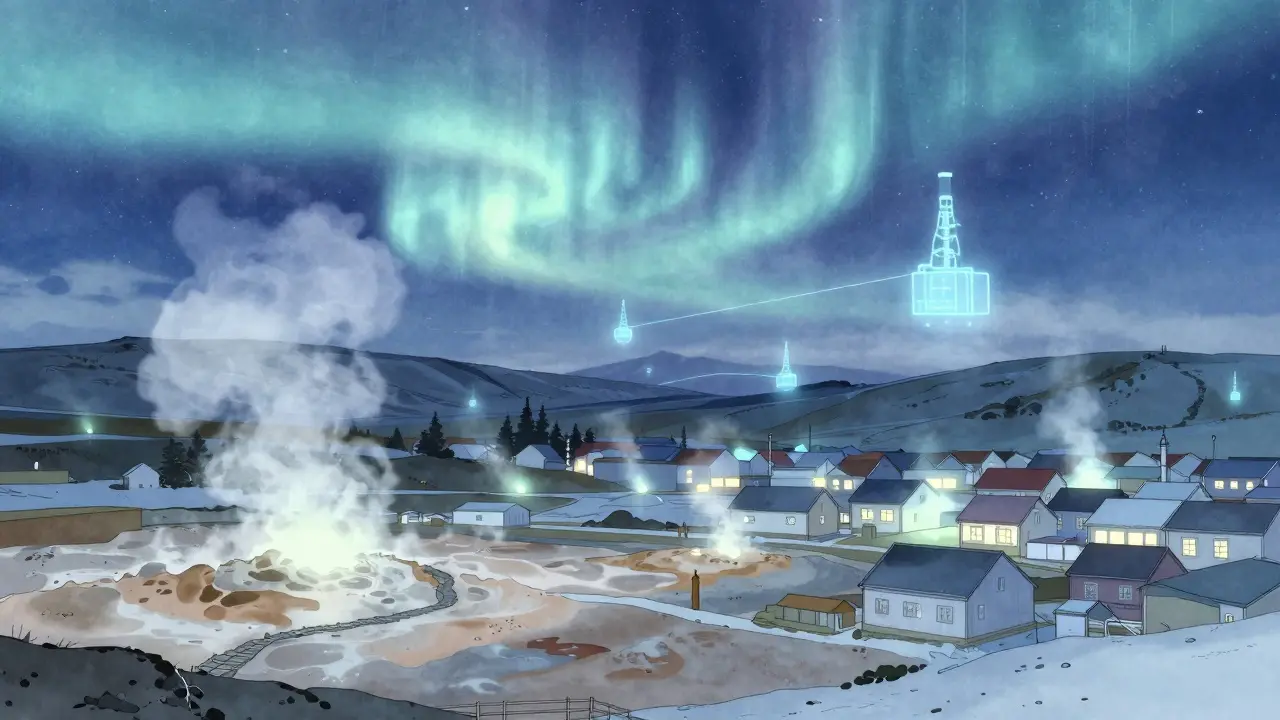
Iceland’s rise as a crypto mining hub wasn’t accidental. It was physics and geography working in perfect sync. The country sits on a volcanic hotspot, giving it nearly unlimited access to geothermal energy. Rivers fed by glaciers provide hydroelectric power. Together, these sources deliver over 99% of the nation’s electricity from renewables. And because Iceland has a population of just 370,000 people, there was plenty of surplus power - until miners showed up. By 2017, crypto mining was already using 90% of all data center electricity in the country. That’s not a typo. Mining rigs, running 24/7, were sucking up more power than the entire capital city of Reykjavík. Companies like Hive Blockchain, Genesis Mining, and Bitfury built massive data centers in the south and west, drawn by low rates and natural cooling. At its peak, crypto mining accounted for nearly 5% of Iceland’s total electricity consumption. For a small island nation, that’s like a single factory consuming the output of a medium-sized power plant.The Energy Crisis That No One Saw Coming
The problem wasn’t just that miners used a lot of power. It was that they used it constantly, with no flexibility. Unlike factories or homes, which can cut usage during peak hours, mining rigs run nonstop. They don’t care if it’s midnight or a cold snap. They need power, and they need it now. By early 2024, the government’s energy planners started sounding alarms. Projections showed that if current mining growth continued, crypto operations would consume more electricity than all Icelandic households combined by the end of the year. That’s not theoretical. That’s real. Schools, hospitals, heating systems, and electric vehicles - all at risk of being sidelined to keep Bitcoin blocks being mined. Prime Minister Kristrún Frostadóttir made it clear in March 2024: “We cannot sacrifice our energy security for speculative digital assets.” That was the turning point. No new mining permits were issued. Existing operators were told their power allocations would be capped. And Landsvirkjun, the state-owned power company that generates 85% of Iceland’s electricity, began enforcing strict usage limits.How the Power Company Is Enforcing Restrictions
Landsvirkjun didn’t slap on a ban. They didn’t need to. They used what they already had: control over the grid. First, they stopped approving new power connections for mining operations. Any company wanting to expand had to prove they were replacing older, less efficient rigs with newer, more energy-efficient models. Even then, approval wasn’t guaranteed. Second, they began auditing existing miners. Power usage is now monitored in real time. If a facility exceeds its allocated limit - even by 5% - the company can cut supply for up to 72 hours. No warnings. No appeals. Just a hard shutdown. Third, they introduced tiered pricing. Miners now pay a premium for power used beyond their baseline allocation. That baseline? It’s tied to the efficiency rating of their hardware. A miner using an outdated Antminer S19 Pro pays more per kilowatt-hour than one using the newer S21 model. The message is clear: upgrade or pay more. Some miners tried to bypass the system by using backup generators. But Landsvirkjun cracked down on that too. Any diesel or gas generator connected to a mining operation must now be registered and taxed. The cost of fuel, permits, and emissions reporting made it cheaper to just reduce mining intensity.
Who’s Getting Hit the Hardest
Not all miners are affected equally. Large, well-funded operations with long-term contracts and modern equipment are still running - but at reduced capacity. Smaller miners, especially those who arrived during the 2021 boom with second-hand rigs and no legal agreements, are the ones getting squeezed out. One operator in Reykjanesbær told a local news outlet he had to shut down 60% of his 2,000 rigs. His revenue dropped by 70%. He’s now trying to sell his hardware to miners in Kazakhstan, where power is still cheap and unregulated. Even big players like Hive Blockchain had to cut back. In their 2024 annual report, they admitted their Icelandic mining output fell by 34% year-over-year. They’re now shifting focus to their Canadian and U.S. facilities, where grid reliability is higher and regulations are clearer.What This Means for Iceland’s Economy
Crypto mining brought real money to Iceland. After the 2008 financial collapse, the country was desperate for growth. Mining created jobs, attracted foreign capital, and boosted local suppliers - from construction firms building data centers to electricians installing wiring. But the economic benefits were uneven. Most of the profits flowed out of the country. The miners paid taxes, yes - but not enough to offset the strain on infrastructure. The government spent millions upgrading transmission lines just to keep the grid stable. And still, power outages in rural areas became more common during winter. Now, the government is trying to pivot. Instead of mining, they’re pushing for blockchain innovation - things like digital identity systems, supply chain tracking, and a potential central bank digital currency (CBDC). The Central Bank of Iceland has been testing a digital krona since 2023. It’s not Bitcoin. But it’s Icelandic, controlled, and energy-efficient.
Scot Sorenson
So let me get this straight - we’re punishing miners for using power that was literally sitting there unused while Icelanders were freezing in their homes? The real crime is that it took this long for someone to notice that crypto mining was the only thing turning Iceland’s surplus into actual money. Now they want to pivot to ‘blockchain innovation’? Please. That’s just crypto with a suit and tie and no hash rate. You don’t get to call it innovation when you’re just scared of the original thing.
Jessica Petry
Of course Iceland’s doing this. The moment you let the hoi polloi get their hands on something valuable, the elite panic and start rationing it. They didn’t ban mining because they care about households - they banned it because they realized they could charge more for power if they controlled the narrative. Now they’ll sell it to Apple for data centers and call it ‘green tech.’ Same thing, different branding.
Ike McMahon
Efficiency-based power allocation is actually a smart move. If you’re still running S19 Pros in 2025, you’re not a miner - you’re a relic. The market’s punishing inefficiency, and Iceland just gave it a legal framework. This isn’t a ban. It’s a upgrade.
JoAnne Geigner
I think this is beautiful, honestly - a small nation choosing to protect its people over global speculation… it’s a quiet act of dignity. Electricity isn’t just a commodity - it’s the pulse of community. When you let external forces dictate how that pulse beats, you lose something irreplaceable. Iceland didn’t say ‘no’ to innovation - they said ‘yes’ to responsibility.
Anselmo Buffet
Kinda makes sense. If your whole country’s running on one battery and someone’s using half of it to play digital slots, you gotta say something. Not mad. Just… yeah.
PRECIOUS EGWABOR
Oh please, the ‘green’ narrative is just a cover. Iceland’s power grid is a monopoly. They didn’t care about miners until they realized they could leverage this to extract more value from the global crypto economy. Now they’re positioning themselves as ethical stewards - while quietly negotiating deals with Silicon Valley to host AI farms under the same ‘energy efficiency’ banner. Same game. New players.
amar zeid
While I appreciate the principled stance of Iceland, I must emphasize that the global cryptocurrency ecosystem requires decentralized energy solutions, not centralized control. The transition from mining to blockchain innovation is commendable, yet it risks creating a new form of technological colonialism - where the Global North rebrands exploitation as sustainability. Perhaps a more equitable model would involve shared infrastructure and revenue redistribution to local communities.
Claire Zapanta
This is the beginning of the Great Energy Purge. The elites in Reykjavík are working with the IMF to phase out decentralized systems - they know crypto threatens their control. The fact that they’re shutting down miners but allowing ‘AI training’? That’s not innovation. That’s surveillance capitalism in disguise. And the ‘digital krona’? It’s a tracker. They’re not saving power - they’re saving surveillance.
Jessica Eacker
You don’t have to hate mining to know when it’s time to move on. Iceland didn’t fail - they evolved. And the miners who adapted? They’re still winning. This isn’t an ending. It’s a pivot.
Madison Surface
I just keep thinking about the guy who shut down 60% of his rigs… he didn’t lose because he was greedy. He lost because the system changed under his feet. That’s the real tragedy - not the power, not the policy, but the people who believed the dream was real. We owe them more than memes. We owe them recognition.
Tiffany M
It’s wild how fast things change - one year you’re the hero of the crypto world, next year you’re the villain who stole the nation’s electricity. Iceland didn’t turn on miners - it just grew up. And honestly? I respect that. We all need to grow up sometime.
Eunice Chook
They didn’t ban mining. They just made it pay for its externalities. That’s not regulation - that’s capitalism working. The miners were getting a subsidy disguised as renewable energy. Now they’re paying market price. Shocking, I know.
Lois Glavin
It’s like when your roommate starts leaving the AC on all day. You don’t kick them out. You just say, hey, you gotta pay for your share. Iceland did that. Simple.
Abhishek Bansal
Wait so now Iceland’s the moral compass of crypto? LOL. They’re just mad their power prices went up because miners were keeping them low. Now they want to sell it to Google for AI and call it ‘sustainable.’ Wake up. This isn’t ethics. It’s greed with a snowflake filter.