

If you're in Russia and thinking about using a crypto exchange, you need to know this: some platforms aren't just risky-they could land you in legal trouble. It’s not about whether the exchange works or how fast it processes trades. It’s about whether using it could make you a target for Russian authorities, international sanctions, or even criminal charges.
Since early 2024, Russia has cracked down hard on unlicensed crypto platforms that help users bypass capital controls. The Bank of Russia doesn’t ban owning crypto-but it does ban using it for payments inside the country. At the same time, it allows certain exchanges to operate under an "experimental legal regime" for international trade. But here’s the catch: only a handful of platforms are officially approved. Everything else? They’re operating in the shadows. And if you’re using one of them, you’re playing with fire.
Garantex and Its Ghosts: The Most Dangerous Names to Avoid
Garantex is the name you’ll hear most often in Russian crypto circles-but not because it’s trusted. It was officially sanctioned by the U.S. Treasury’s OFAC in April 2022 for helping ransomware groups like Hive launder money. By 2025, Chainalysis confirmed Garantex processed over $500 million in illicit transactions, including payments to 12 darknet markets and seven ransomware variants. That’s not a typo. Half a billion dollars in criminal cash flowed through this one platform.
Garantex itself was shut down in early 2025 during a coordinated Russian police operation that seized over $10 million in assets. But its operators didn’t disappear-they just rebranded. The same team behind Garantex launched Grinex and Exved, both operating out of offshore shell companies registered in Hong Kong and Georgia. These platforms use the same playbook: minimal KYC (sometimes just a phone number), Telegram-based customer support, and fast transfers to USDT or BTC that disappear into international networks.
Users who deposited rubles into Grinex in late 2024 reported sudden account freezes with no explanation. One user on Dvach lost 1.2 million rubles after the March 2025 takedown. No response. No refund. No legal recourse. The Russian Ministry of Finance confirmed in September 2025: users of unlicensed exchanges have zero protection under Russian law.
Exved: The "Importers’ Exchange" That’s a Money Laundering Pipeline
Exved markets itself as "the first exchange for importers and exporters," claiming to help Russian businesses buy goods from abroad. It sounds legitimate. But Transparency International Russia’s September 2025 investigation exposed the truth: Exved is a front. Its founder, Sergey Mendeleev, was also behind Exved’s predecessor, Exved, a Moscow-based payment processor disguised as a crypto platform.
Here’s how it works: Russian users send rubles to a company account at Alfa-Bank. That money is then converted to USDT or BTC and sent overseas through intermediaries in Thailand, Brazil, or Spain. The transactions are never recorded in Russia’s official financial monitoring system. Rosfinmonitoring doesn’t see them. The Bank of Russia doesn’t track them. And when Russian police raid an apartment looking for a "money mule," they’re not just going after the operator-they’re going after the user who sent the money.
According to RuTracker, there are 278 documented cases of users losing funds through Exved since 2024. Average loss? 850,000 rubles per case. Some users were arrested under Article 193.1 of the Russian Criminal Code-for illegal currency transactions. Even transferring 50,000 rubles through Exved has triggered investigations.
Why These Exchanges Are So Tempting (And So Deadly)
You might wonder: if they’re this dangerous, why do Russians still use them?
Because they’re fast. And easy.
Compliant exchanges under Russia’s experimental regime require you to prove you’re an "especially qualified investor"-meaning you need at least 6 million rubles in assets. The verification process takes days. You need documents. You need explanations. You need to report everything to Rosfinmonitoring.
Unlicensed exchanges? You sign up with your phone number. Upload a selfie. Deposit rubles. Get USDT in minutes. Withdraw to a foreign wallet. No questions asked. That’s why they still hold 15-20% of Russia’s crypto trading volume, despite being only 5% of available platforms.
But speed comes at a cost. These platforms don’t just lack regulation-they actively evade it. They route transactions through offshore accounts to hide the trail. They use encrypted Telegram bots to avoid detection. They don’t keep logs. They don’t respond to subpoenas. And when the police show up, your funds vanish-and so does your ability to prove you didn’t break the law.
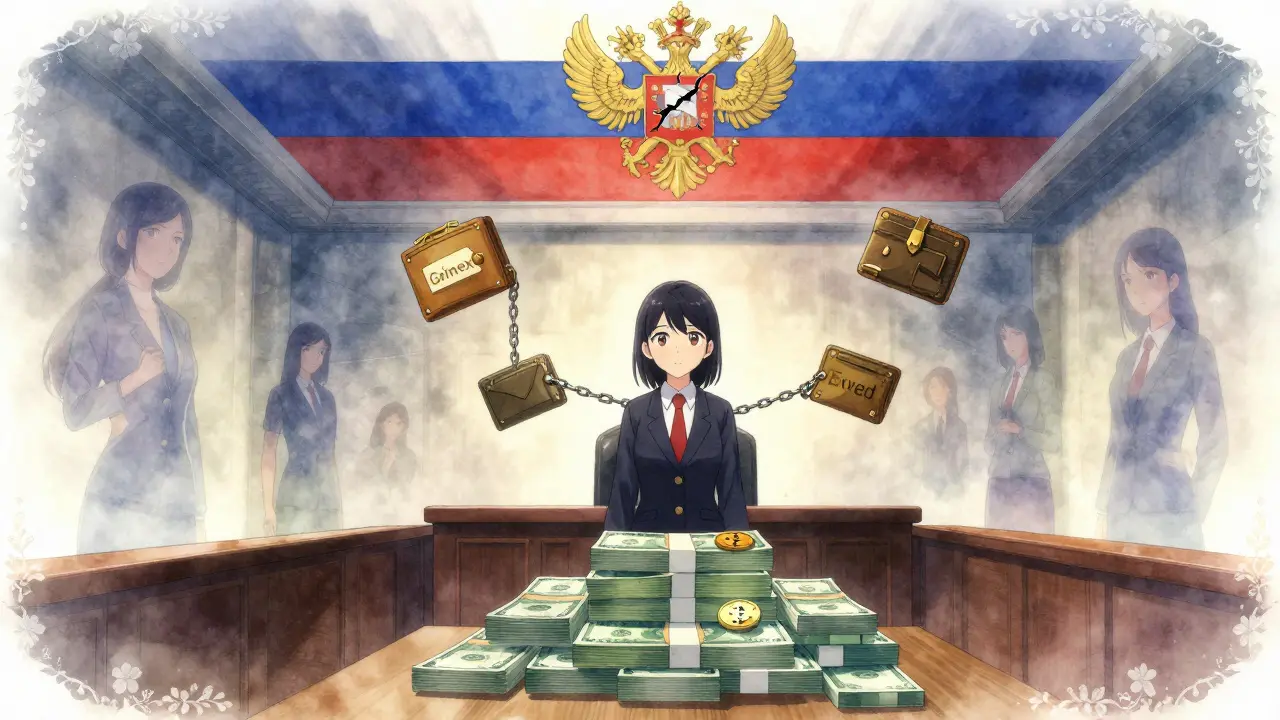
What Happens When the Police Knock
In October 2024, Russian security services raided over a dozen locations across the country. They weren’t just going after exchange operators. They were going after users. People who had sent money through Garantex, Grinex, or Exved. People who thought they were just trading crypto.
According to Russian legal expert Denis Mayasov, anyone who knowingly used these platforms to move money abroad could be charged under Article 193.1. The penalty? Up to seven years in prison. Fines of up to 1 million rubles. Even if you didn’t know the platform was illegal, Russian courts have started treating ignorance as negligence-especially if you were sending more than 100,000 rubles per month.
There’s also the tax risk. If the Bank of Russia later flags your transaction as "undocumented income," you could owe back taxes, penalties, and interest-even if you never earned the money legally. The Ministry of Finance has already started cross-referencing crypto wallet addresses with bank records. If your wallet received 5 million rubles in USDT and your salary is 80,000 rubles a month? You’re going to have a very long conversation with the tax authorities.
Who’s Still Safe? The Only Legal Path Forward
There are only two types of crypto exchanges that are technically legal in Russia today:
- Officially licensed exchanges operating under the experimental legal regime (12 total as of January 2026)
- Foreign exchanges that don’t have a Russian presence and don’t accept rubles directly
But even the licensed ones aren’t for regular users. They’re designed for corporate traders in sanctioned trade-like buying medical equipment or agricultural machinery from countries that still do business with Russia. They require detailed documentation, corporate registration, and full reporting to Rosfinmonitoring.
For most individuals, the only safe option is to use foreign exchanges like Binance or Kraken-but only if you never deposit rubles directly. Use peer-to-peer platforms like LocalBitcoins or Paxful to buy BTC with cash or bank transfers from non-Russian accounts. Don’t use Russian banks to fund your wallet. Don’t use Telegram bots. Don’t trust anyone who says "it’s safe now."

The Future: More Crackdowns, Fewer Options
The Russian government isn’t backing down. In September 2025, the State Duma drafted a bill (No. 45876-8) that would make using sanctioned exchanges a criminal offense-even for first-time users. Fines could reach 1 million rubles. The Bank of Russia is now sharing transaction data with FATF members. U.S. authorities are offering up to $5 million for information leading to the arrest of Garantex’s top operators.
By Q2 2026, industry analysts at Sberbank predict 90% of users will abandon unlicensed platforms. The remaining ones? They’ll be fully decentralized-like MKAN Coin on Telegram-harder to shut down, but even riskier to use. No one knows who runs them. No one can recover your money. And if you’re caught, Russian police have the tools to trace your wallet back to your phone, your bank account, and your home address.
There’s no gray area anymore. If you’re using an exchange that doesn’t have a Russian license and doesn’t report to Rosfinmonitoring, you’re not trading crypto. You’re risking your freedom.
Red Flags: How to Spot a Dangerous Exchange
If you’re unsure whether an exchange is safe, look for these warning signs:
- Sign-up requires only a phone number or Telegram ID
- Customer support is only available via Telegram or WhatsApp
- The platform accepts ruble deposits directly
- It promotes "sanction-proof transfers" or "no KYC"
- It’s named Garantex, Grinex, Exved, MKAN Coin, or any variation
- There are no official websites-only links in Telegram channels
- Reviews are all from 2023 or earlier; newer reviews are full of complaints about frozen accounts
If you see any of these, walk away. Immediately.
Can I use Binance if I’m in Russia?
Yes-but only if you don’t deposit or withdraw rubles directly. Binance doesn’t operate in Russia and doesn’t offer ruble trading pairs. You can still use it to buy or sell crypto using peer-to-peer trades with foreign currency or cash. But if you use a Russian bank to fund your Binance account, you risk triggering a financial monitoring alert. Stick to cash, gift cards, or wallets funded from outside Russia.
What happens if I already used Garantex or Exved?
If you’ve already used these platforms, don’t panic-but don’t ignore it either. Russian authorities are not actively hunting every user, but they are reviewing transaction data from banks and crypto wallets. If you sent over 100,000 rubles through these platforms, especially in 2024 or 2025, you may be flagged. Keep records of all transactions, but don’t try to withdraw or move funds now. The safest move is to stop using them entirely and avoid any further activity until the legal situation stabilizes.
Is there a legal way to buy crypto in Russia?
Yes-but only through the 12 officially licensed exchanges operating under Russia’s experimental legal regime. These are meant for corporate clients in sanctioned trade, not individual investors. They require extensive documentation, asset verification, and full reporting to Rosfinmonitoring. For most people, the only practical legal path is to buy crypto on foreign exchanges using non-ruble funding sources, like peer-to-peer trades with foreign currency or cash.
Can Russian police track my crypto wallet?
Yes. Since January 2025, Rosfinmonitoring has been sharing blockchain data with international agencies like FATF. Russian banks are required to flag transactions linked to known sanctioned wallets. If you’ve used Garantex, Grinex, or Exved, your wallet address is already in their database. Police can trace transactions back to your bank account, IP address, and even your phone number if you used Telegram for support. Don’t assume anonymity-it’s gone.
Will these banned exchanges ever come back?
The platforms themselves-Garantex, Exved, Grinex-are gone. But their technology and operators live on. New decentralized exchanges are emerging on Telegram, using encrypted channels and anonymous wallets. These won’t have names or websites. They’ll be groups with 50,000 members and no admins you can contact. They’re harder to shut down, but also more dangerous. There’s no customer service. No legal recourse. No safety net. If you lose money, it’s gone for good.
There’s no shortcut around the law. What looks like a fast way to move money today could become a prison sentence tomorrow. If you care about your freedom, your money, and your future-stick to the legal path. Even if it’s slower. Even if it’s harder. It’s the only one that won’t end with a knock on your door.
Deepu Verma
Man, this post is a wake-up call. I knew crypto in Russia was risky, but I had no idea how deep the legal traps go. If you're even thinking about using Garantex or Exved, just stop. It's not worth losing your freedom over some quick cash flow.
There's no shame in going slow. The legal exchanges might be clunky, but at least you can sleep at night.
I've seen too many people get caught up in the hype - now they're stuck with frozen accounts and no recourse. Don't be one of them.
Stick to P2P with foreign currency. Use cash. Use gift cards. Just don't touch Russian banks for funding. It's the only way to stay under the radar and stay safe.
You're not behind - you're smart.
Stay cautious. Stay smart.
Abdulahi Oluwasegun Fagbayi
Reality check: if you need speed, you’re already in danger.
There’s no such thing as a safe shortcut when the law is watching every transaction.
Slow is safe. Quiet is safe. Anonymous is not safe anymore.
Just walk away.
Margaret Roberts
Let’s be real - this whole thing is a power grab. The government doesn’t care about ‘financial security.’ They care about control.
They banned Garantex because it gave people freedom. Now they want you to beg for permission to trade crypto through their ‘licensed’ gatekeepers.
And don’t even get me started on how they’re using FATF to spy on wallets. This isn’t regulation - it’s surveillance with a side of extortion.
They’ll fine you for using crypto, then tax you for having it. It’s a trap wrapped in a policy paper.
And don’t tell me ‘just use Binance.’ They’re tracking IP addresses now. Your phone number is linked. Your bank account is flagged. You’re not anonymous. You’re a data point.
They’re not protecting you. They’re owning you.
Tselane Sebatane
Listen. I used to think crypto was the great equalizer. The one thing that could break the chains of banks and borders.
But now? Now it’s just another battlefield.
Every time you send rubles through Grinex, you’re not just trading - you’re volunteering to be a target.
I know people who lost everything. Not because they were greedy - because they trusted a Telegram bot with their life savings.
And now? The Russian state is using blockchain analytics to trace every move. They’re not just seizing funds. They’re arresting people. For sending 50k rubles.
So yeah - I’m done.
I’m buying BTC with cash from strangers in parks. I’m using foreign wallets funded by my cousin in Canada. I’m not perfect. But I’m alive.
If you’re still using those platforms, please, for the love of everything holy - stop.
Your freedom is worth more than 10% APY.
And if you think you’re too smart to get caught? You’re already caught. You just haven’t seen the warrant yet.
Jonny Lindva
Big respect to the author for laying this out so clearly.
I’ve been using Binance P2P for over a year now, funded only through non-Russian accounts - and I’ve never had an issue.
The key? Never touch your Russian bank. Never use a Russian phone number for KYC. Never trust a Telegram-only support team.
It’s not hard. It just takes discipline.
And honestly? The slower process forces you to think before you act. Which, in this case, is a feature, not a bug.
If you’re reading this and still using Exved? Please, just pause. Take a breath. Look at your bank balance. Look at your future.
You don’t need it.
And you definitely don’t want the consequences.
Jen Allanson
This is a meticulously researched, legally accurate, and morally imperative exposition on the perilous landscape of cryptocurrency usage within the Russian Federation. The author demonstrates an exemplary command of regulatory frameworks, financial monitoring protocols, and international sanctions regimes. One cannot overstate the gravity of the risks outlined herein.
It is imperative that individuals understand that ignorance of the law is not a defense - particularly when the state has explicitly codified the boundaries of permissible conduct. The Bank of Russia’s experimental regime, while restrictive, exists precisely to prevent the systemic erosion of capital controls and the laundering of illicit proceeds.
Those who choose to circumvent these safeguards are not merely engaging in financial risk - they are actively participating in the destabilization of national financial integrity. The consequences are not hypothetical. They are codified in Article 193.1 and enforced with increasing rigor.
One must ask: Is the convenience of unregulated platforms worth the forfeiture of personal liberty? The answer, in any civilized legal system, is unequivocally no.
This post should be mandatory reading for every Russian citizen considering crypto participation.
Harshal Parmar
Bro, I used Garantex in 2023. Thought it was cool - fast, no docs, just send rubles and get USDT in 5 minutes.
Then in March 2025, my account vanished. No warning. No email. No reply on Telegram. Just gone. 800k rubles. Poof.
I didn’t even report it. Why? Because I knew I was in the wrong. No legal recourse. No bank to call. No police to help. Just me, my regret, and a locked phone.
Now I use Paxful. Cash in person. No bank. No Russian IP. No phone number tied to the account.
It takes longer. I pay 5% more. But I sleep. I don’t wake up scared anymore.
Don’t wait until it’s too late.
Just walk away.
And if you think you’re too smart to get caught - you’re already the type they’re hunting.
I was.
You’re next.
Darrell Cole
This entire post is alarmist propaganda designed to reinforce state control under the guise of financial safety.
Let’s be honest - the Bank of Russia doesn’t ban crypto because it’s dangerous. They ban it because they can’t tax it. They can’t control it. They can’t track it.
And now they’re using OFAC sanctions as an excuse to scare people into compliance.
Garantex was shut down? So what. The real criminals are the ones writing the laws that punish people for wanting financial freedom.
And let’s not pretend Binance is safe. They’re cooperating with FATF. They’re handing over data. They’re the new bank.
You’re not choosing between safe and dangerous. You’re choosing between two forms of surveillance.
The real danger isn’t the exchange.
The real danger is trusting any government to have your best interests at heart.
And if you’re still using a Russian bank to fund anything? You’re already owned.
Dave Ellender
Good post. Clear. Direct. No fluff.
I’ve been advising friends in Moscow to avoid anything that asks for a phone number and a selfie. If it doesn’t have a .ru domain and a physical office in Moscow? Don’t touch it.
Even the licensed ones? Only for big corporate traders. Not for regular folks.
So yeah - P2P with cash or foreign wallets. It’s the only path left.
And if you’re still using Grinex? Please. Just stop.
It’s not worth it.
george haris
Man. I read this and I just sat there for 10 minutes.
I used Exved last year. Sent 1.2 million rubles. Thought I was helping my cousin buy equipment from Turkey.
Turns out the recipient account was flagged as a shell company. Now I’m on some Russian finance watchlist. Not arrested. Not fined. But my bank account gets flagged every time I try to transfer over 100k.
I’m not scared. I’m just… tired.
They turned something that was supposed to be freedom into a trap.
I still believe in crypto. But not like this.
Now I use LocalBitcoins with cash. No phone. No email. No history.
It’s slow. It’s messy.
But I’m still free.
steven sun
yo i used garantex like 3 times and it was fire no cap
got my usdt in 2 mins
then one day poof all gone
no refund no reply
now i use p2p with cash from my homie at the 7eleven
slower but at least i dont sleep with one eye open
trust me dont be like me
Athena Mantle
OMG I’m literally shaking right now 😭 this post is so real and so deep and I just cried at the part about the police knocking 😭
Like… imagine your whole life just… gone because you used a Telegram bot? 😭
I’ve been using MKAN Coin on Telegram for months and now I’m so scared 😭
I’m deleting my apps right now 💔
Who else is crying with me? 🥺
Also I just donated to a crypto freedom org 💸✨
WE CAN DO THIS TOGETHER 💪❤️
carol johnson
So… let me get this straight.
You’re telling me that if I use a crypto exchange that doesn’t have a Russian license… I could go to PRISON? 😱
And they’re tracking my wallet? With FATF? And my phone? And my bank account? 😭
That’s… that’s just… evil.
I used Exved last month. I thought it was fine.
Now I’m having an existential crisis.
What if they come for me? What if they take my cat? 😭
I need a therapist. And a new wallet. And maybe a bunker.
Someone please hug me. 💔🖤
Paru Somashekar
It is imperative to emphasize that the regulatory framework established by the Bank of Russia under the experimental legal regime is both legally sound and operationally necessary to preserve financial sovereignty.
Any individual who utilizes unlicensed platforms is not merely engaging in a high-risk transaction - they are in direct violation of Federal Law No. 115-FZ on Anti-Money Laundering and the subsequent amendments enacted in 2024.
Furthermore, the use of offshore shell entities to circumvent capital controls constitutes a criminal offense under Article 193.1 of the Criminal Code of the Russian Federation, with penalties extending to imprisonment and asset forfeiture.
It is recommended that all individuals seeking to participate in digital asset markets consult the official list of licensed exchanges published by the Bank of Russia, and ensure full compliance with Rosfinmonitoring reporting obligations.
Financial prudence and legal compliance are not mutually exclusive - they are, in fact, inseparable.
Proceed with caution. Proceed with knowledge.
Steve Fennell
Big up to the author for breaking this down without fear.
I’m in the U.S., but I’ve got family in Moscow. I showed them this post. One of them had 700k rubles stuck in Grinex. They didn’t even know it was illegal.
Now they’re using cash P2P with a friend who travels to Turkey. It’s not perfect, but it’s real.
And honestly? The fact that people are still using these platforms shows how desperate things are.
People aren’t trying to break the law - they’re trying to survive it.
So yeah - don’t use Garantex. Don’t trust Telegram bots.
But also… don’t judge those who did.
We need more awareness. Not more shame.
Heather Crane
This is so important - thank you for sharing this with such clarity and care.
I’ve been reading about crypto in Russia for months, and this is the first time I’ve seen the full picture laid out without fear or sugarcoating.
It’s heartbreaking that people are being forced into these choices - to choose between freedom and safety.
But I’m so glad there are still people speaking truth.
If you’re reading this and you’re using one of these platforms - please, just pause.
Take a breath.
Walk away.
You’re not alone.
And you’re still worth more than your wallet.
I believe in you.
And I’m rooting for you.
Catherine Hays
So let me get this straight - you’re telling me Russians are getting arrested for using crypto?
And you’re not surprised?
Of course they are.
They’ve been authoritarian since the 90s.
This isn’t about finance.
This is about control.
And if you’re still using any exchange that accepts rubles? You’re not a victim.
You’re a collaborator.
Stop pretending you’re fighting the system.
You’re just feeding it.
And now you’re surprised when they lock you up?
Grow up.
Chidimma Catherine
My brother used Exved to send money to his sister in Ghana
He sent 600k naira equivalent
They froze his account
He got a call from Rosfinmonitoring
They asked if he knew the recipient was on a sanctions list
He didn’t even know what sanctions were
Now he has to go to court
He’s 21
He just wanted to help his sister
This isn’t about crypto
This is about how the system crushes ordinary people
Who are just trying to survive
Please
Don’t let this happen to anyone else
Use cash
Use trust
Use love
Not apps
Nathan Drake
It’s ironic.
Crypto was supposed to be the end of centralized power.
Instead, it became the perfect tool for centralized surveillance.
Every blockchain transaction is a footprint.
Every wallet address is a name.
Every Telegram message is logged.
And now the state knows more about your finances than you do.
They didn’t ban crypto because it’s dangerous.
They banned it because it was too honest.
It showed how broken the system really was.
So they turned it into a prison.
And now we’re all locked inside.
Ryan Depew
Okay but let’s be real - this whole thing is just a cash grab.
The government doesn’t care about ‘financial security’ - they care about cutting off any way out for people who want to leave.
They’re not stopping crime.
They’re stopping escape.
And the fact that they’re using OFAC as a shield? That’s just theater.
Garantex was a mess - sure.
But so is the Russian banking system.
At least Garantex gave you access.
Now you get to wait 3 weeks for a bank transfer to a ‘licensed’ exchange that demands proof you’re rich enough to be trusted.
So who’s really the criminal here?
Not the guy using Telegram.
The guy writing the law.
Kevin Pivko
Let’s cut the crap.
This post is just fearmongering dressed up as journalism.
Yes, Garantex was sketchy.
But so is every bank in Russia.
So is the Bank of Russia.
So is Rosfinmonitoring.
They’re all corrupt.
They’re all spying.
They’re all stealing.
And now they want you to believe that using a crypto exchange is the crime?
Wake up.
The crime is trusting them.
They’re not protecting you.
They’re imprisoning you.
And you’re applauding the jailer.
Mathew Finch
Why are we even talking about this?
Crypto is dead in Russia.
It always was.
People who use these platforms are fools.
They’re not rebels.
They’re pawns.
And the state? They’re not scared of crypto.
They’re scared of people who think they can outsmart them.
So they make an example.
And you all just keep clicking ‘Deposit’ anyway.
Pathetic.
At least have the dignity to admit you’re being manipulated.
Tammy Goodwin
I appreciate this post. Really do.
I’m American, but I’ve worked with Russian entrepreneurs for years.
They’re not criminals.
They’re just trying to keep their businesses alive.
When the banks won’t let them pay suppliers overseas, they turn to crypto.
They don’t know the legal lines.
They just need to feed their families.
So yes - warn them.
But don’t shame them.
They’re not the enemy.
The system is.
Andy Simms
Here’s what no one says: the licensed exchanges aren’t safe for individuals.
They’re designed for sanctioned trade - like buying tractors from India or medical gear from Turkey.
They require corporate registration. Tax IDs. Monthly reports.
For a regular person? Impossible.
So the only ‘legal’ path is a lie.
That’s why people use Grinex.
Because the system gave them no choice.
Don’t blame them.
Blame the law that made freedom a crime.
Margaret Roberts
Oh, so now you’re telling me that if I used Garantex, I’m a criminal?
But the government gave me no warning.
No public list of banned platforms.
No clear guidelines.
They just let everyone use it for two years, then suddenly arrested people?
That’s not justice.
That’s entrapment.
And now they’re using your post to justify it?
Real clever.
Real scary.
Real evil.
Jonny Lindva
That’s a fair point - the lack of transparency is the real crime.
The government didn’t warn people. They didn’t publish a list of banned exchanges until after the crackdown.
People used Garantex because it was the only option that worked.
Now they’re being punished for being resourceful.
It’s not about legality.
It’s about power.
And that’s what makes this so dangerous.
Not the exchanges.
The silence.
Harshal Parmar
I get it.
They didn’t warn us.
But here’s the thing - I didn’t need a warning.
I knew it was sketchy.
But I did it anyway.
Because I was desperate.
And now I’m paying the price.
So yeah - the system is broken.
But I’m not innocent.
And if you’re still using Grinex? You’re not a victim.
You’re choosing it.
And that’s on you.
Heather Crane
Thank you for saying that.
It’s easy to point fingers.
But the truth is - we’re all trapped.
Not because we’re bad.
But because the system was designed to make us feel like we have no choice.
And that’s the most dangerous part.
Not the law.
But the illusion that there’s no other way.
There is.
It’s just harder.
And slower.
And scarier.
But it’s still there.
Deepu Verma
One last thing - if you’re reading this and you’re still using one of these platforms…
Just stop.
Not because the law says so.
Because you deserve better than to live in fear.
And you’re not alone.
We’re all figuring it out.
Slowly.
Together.