
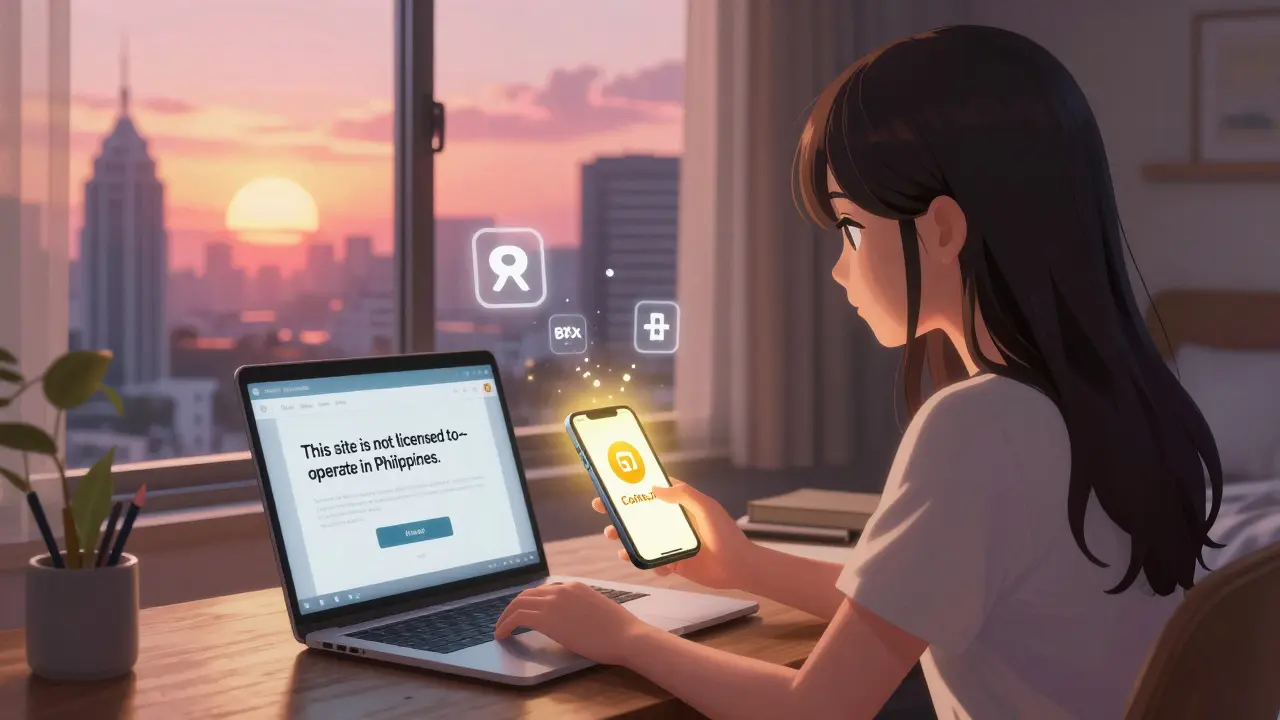
The Philippines SEC crypto blacklist isn’t just a warning - it’s a full-scale enforcement action that changed how millions of Filipinos access cryptocurrency. On August 1, 2025, the Securities and Exchange Commission (SEC) publicly named 10 major global exchanges operating illegally in the country. By August 25, that list grew to 15, including giants like OKX, Bybit, KuCoin, Kraken, and CoinEx. These platforms didn’t just get a polite reminder - they were blocked at the network level by major ISPs like PLDT and Globe Telecom. If you tried to visit any of them after August 7, you’d see a government notice: "This site is not licensed to operate in the Philippines."
Why Did the SEC Do This?
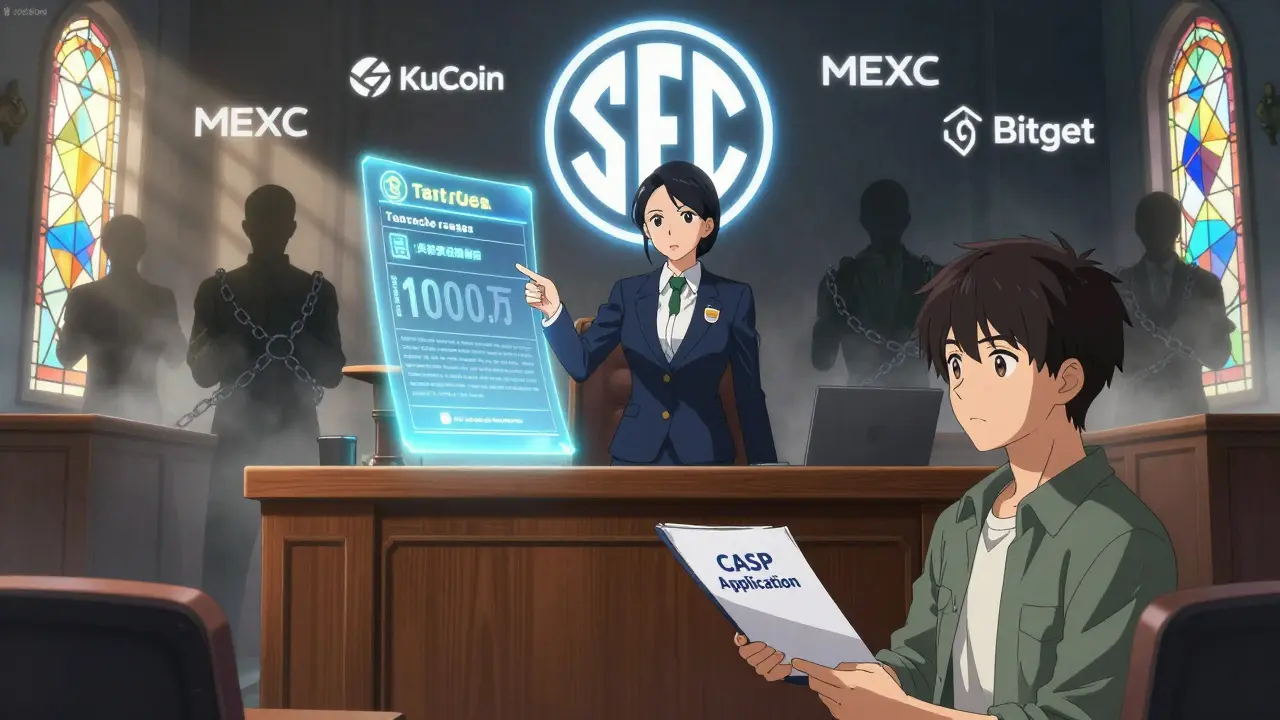
The move didn’t come out of nowhere. In May 2025, the SEC released two critical rules: Memorandum Circular No. 4 and No. 5. Together, they created the country’s first-ever legal framework for Crypto Asset Service Providers (CASP). Before this, anyone with a website could offer trading to Filipinos. No registration. No oversight. No accountability. That changed on July 5, 2025.Now, every exchange that wants to serve users in the Philippines must meet three hard requirements:
- Be registered as a domestic corporation in the Philippines
- Hold at least 100 million pesos (around $1.8 million USD) in capital
- Have a physical office inside the country
That’s not a suggestion. It’s a legal mandate. And it’s designed to protect ordinary Filipinos. In the past, when exchanges like FTX collapsed, users lost everything - with no recourse. The SEC wanted to make sure that doesn’t happen again. Customer funds must be kept separate from company money. Monthly financial reports are required. Penalties for violations? Up to 10 million pesos per offense, plus 10,000 pesos per day for ongoing breaches.
Who Got Blocked?
The blacklist includes some of the biggest names in crypto. Not small, unknown platforms - the kind you’ve probably heard of if you trade digital assets.- OKX - Top 3 global exchange by volume, heavily used in Southeast Asia
- Bybit - Popular for derivatives and futures trading
- KuCoin - Known for listing hundreds of altcoins
- Kraken - One of the oldest U.S.-based exchanges, known for compliance elsewhere
- MEXC, Bitget, CoinEx, Phemex, BitMart, Poloniex - All major platforms with large Filipino user bases
- Blofin, CoinW, DigiFinex, LBank, Pionex - Added later, showing the crackdown is still expanding
Even Kraken, which follows strict rules in the U.S. and Europe, got blocked. Why? Because it didn’t register under Philippine law. Size and reputation don’t matter here. Only compliance does.
What Happens When You Try to Access a Blocked Exchange?
If you’re in the Philippines and try to open OKX or Bybit, you won’t get a 404 error. You’ll see an official notice from the SEC. It’s not a pop-up or a banner - it’s a full-page block enforced by your internet provider. The message is clear: this platform is operating illegally in the country.Some users turned to VPNs to bypass the block. But that’s risky. The SEC warned that using unlicensed platforms still makes you liable under Philippine law. You might be able to access your account, but you’re not protected if something goes wrong. No legal recourse. No insurance. No audit trail.
Is Crypto Trading Banned?
No. The SEC made this clear repeatedly: “We are not banning cryptocurrency. We are banning unlicensed service providers.” You can still buy Bitcoin, Ethereum, or Solana - just not through platforms that refuse to follow local rules.The goal isn’t to stop trading. It’s to make it safer. The SEC wants to bring crypto into the same regulatory space as stocks, bonds, and mutual funds. If you want to offer trading services to Filipinos, you need to be licensed, accountable, and physically present. That’s it.
How Are People Reacting?
Reactions are split. On Reddit and Twitter, experienced traders are adapting. They’re moving to licensed platforms like Coins.ph and PDAX, which registered under the new rules. Some even say the crackdown improved the market - fewer scams, more transparency.But newcomers are struggling. Many used Kraken or Bybit because they offered lower fees, better interfaces, or more coins. Now they’re stuck. Some are learning to use VPNs. Others are waiting to see if the SEC will approve more platforms. A few are leaving the market entirely.
There’s also frustration about the physical office requirement. For a global exchange, opening a Manila office with a local team, bank account, and compliance staff costs millions. Is it worth it for a market of 10 million users? Some platforms may decide it’s not.

What’s the Bigger Picture?
The Philippines isn’t alone. Thailand blocked five exchanges in May 2025. Indonesia raised taxes on offshore crypto trades from 0.2% to 1%. Singapore tightened licensing. Even Malaysia is moving toward a similar model.This is part of a regional shift. Southeast Asian governments are no longer letting crypto operate in the shadows. They’re demanding accountability. And they’re using real tools - ISP blocks, financial penalties, legal action - to enforce it.
For Filipino investors, this means less choice - but more safety. For global exchanges, it means choosing: adapt or exit.
What Should You Do Now?
If you’re a Filipino crypto user, here’s what you need to do:- Stop using any exchange on the SEC blacklist. Even if you can access it with a VPN, you’re not protected.
- Move your assets to a licensed CASP. Coins.ph and PDAX are the only two fully registered platforms as of December 2025.
- Check the SEC website monthly. The list of approved exchanges is updated regularly. New platforms may get licensed soon.
- Never send money to an unlicensed platform. If it’s not on the SEC’s approved list, it’s not legal.
- Report suspicious platforms to the SEC. You can do this anonymously through their online portal.
If you’re a trader who used Kraken or OKX for margin trading or altcoins, you’ll miss those features. But the SEC is pushing licensed exchanges to expand their offerings. PDAX already added staking and fiat on-ramps. Coins.ph is testing derivatives. The market is evolving - slowly, but it’s evolving.
What’s Next?
The SEC says the blacklist isn’t final. More exchanges could be added. More could apply and get approved. The regulator is actively reviewing applications. The deadline for registration passed in July, but the SEC is still accepting late submissions - as long as they meet all requirements.Some analysts believe the 100 million peso capital requirement is too high. They argue it favors big players and crushes local innovation. But the SEC says investor protection comes before competition. And so far, no major exchange collapse has happened since the rules took effect.
The message is clear: if you want to serve Filipino users, you play by Philippine rules. No exceptions. No shortcuts. No loopholes.
Is it illegal to trade crypto in the Philippines?
No, it’s not illegal to trade crypto in the Philippines. The SEC only bans unlicensed exchanges from operating in the country. You can still buy, sell, and hold cryptocurrencies - but only through platforms that are officially registered as Crypto Asset Service Providers (CASP). As of December 2025, only Coins.ph and PDAX meet this requirement.
Why was Kraken blocked if it’s compliant elsewhere?
Kraken follows strict rules in the U.S. and Europe, but it never registered under the Philippines’ new CASP framework. The SEC doesn’t recognize foreign licenses. Even if a platform is legal in the U.S., it must still meet local requirements: a Philippine corporation, 100 million pesos in capital, and a physical office in the country. Kraken chose not to comply, so it was blocked.
Can I still use a VPN to access blocked exchanges?
Technically, yes - but it’s risky. The SEC warns that using unlicensed platforms still violates Philippine law. If something goes wrong - like a hack, freeze, or collapse - you have no legal protection. Your funds are not insured. You can’t file a complaint with the SEC. Using a VPN doesn’t make the platform legal. It just hides the block.
Are there any licensed crypto exchanges in the Philippines right now?
As of December 2025, only two exchanges are fully licensed: Coins.ph and PDAX. Both are registered as domestic corporations, meet the 100 million peso capital requirement, and have physical offices in the Philippines. They offer spot trading, fiat on-ramps, and some staking options. More may be approved in 2026, but no others are officially licensed yet.
What happens if I lose money on a blocked exchange?
If you lost money on a platform that’s on the SEC blacklist, you have no legal recourse. The SEC does not protect users of unlicensed exchanges. There’s no insurance fund, no compensation program, and no way to file a claim. This is why the SEC insists on licensing - to prevent exactly this scenario. Always use only registered platforms.
Will the SEC allow foreign exchanges to operate without a local office?
No. The physical office requirement is non-negotiable. The SEC says it’s essential to ensure accountability, enable audits, and allow regulators to take enforcement action if needed. Foreign companies cannot operate remotely. They must establish a legal presence in the Philippines. This rule is modeled after how banks and securities firms are regulated.
How often does the SEC update the blacklist?
The SEC updates the list whenever new platforms are found operating without a license. The first list had 10 exchanges. Five more were added within weeks. The regulator says it monitors traffic, user complaints, and financial data continuously. If a new platform starts targeting Filipino users without registering, it will be added. There’s no fixed schedule - enforcement is ongoing.
Is the Philippines the only country doing this?
No. Thailand blocked five exchanges in May 2025. Indonesia raised taxes on offshore crypto trades to 1%. Singapore and Malaysia are tightening licensing too. Southeast Asia is moving toward a unified approach: no more anonymous, offshore crypto platforms. The Philippines is one of the most aggressive, but it’s part of a regional trend.
Can I start my own crypto exchange in the Philippines?
Yes, but it’s difficult. You need to register as a domestic corporation, raise at least 100 million pesos in capital, set up a physical office, hire local compliance staff, and submit monthly financial reports. The SEC reviews applications carefully. Only a few local startups have applied so far. It’s not impossible, but it’s not easy either.
What’s the long-term impact of this crackdown?
In the short term, trading volume dropped as users adjusted. But in the long term, this could lead to a more stable, trustworthy crypto market in the Philippines. Fewer scams. More transparency. Better investor education. The SEC believes that regulation will attract serious players - not just speculative platforms. If licensed exchanges offer good services, users will stay. The goal is to build a real financial ecosystem, not just another gambling zone.
Rishav Ranjan
Too much hassle for little gain.
Megan O'Brien
The SEC’s framing is pure regulatory theater. They’re not protecting users-they’re protecting legacy financial gatekeepers. Crypto’s whole point is disintermediation, yet they demand physical offices and 100M PHP capital like we’re back in 2008 banking compliance. It’s not safety-it’s rent-seeking dressed up as consumer protection.
Jacob Lawrenson
Bro this is actually kind of fire 😎
Imagine a government actually saying 'no more scams' and backing it up. Coins.ph and PDAX are the new OGs now. Time to level up your portfolio.
Mmathapelo Ndlovu
Love how this is happening in SE Asia 🌏
It’s not about control-it’s about care. So many people lost everything to shady platforms. Now they have a chance to trade without fear. Big love to the SEC for stepping up 💪❤️
Cathy Bounchareune
They blocked Kraken? Bro, that’s like banning Starbucks because it didn’t open a branch in your town. You can still brew your own coffee, but now you gotta do it with local beans. The vibe’s different, but the caffeine’s still there.
Jordan Renaud
It’s messy, but necessary. The crypto wild west was never sustainable. People were losing life savings to shell companies with zero accountability. This isn’t the end of crypto-it’s the beginning of maturity. Slow growth beats fast collapse every time.
Luke Steven
VPN users are playing with fire. The SEC’s warning isn’t just legal-it’s existential. If your exchange vanishes tomorrow, you won’t even get a refund email. No court, no lawyer, no hope. The convenience of Bybit isn’t worth becoming a footnote in a crypto graveyard.
Ellen Sales
so like… crypto’s illegal now? 😅
nah but also kinda??
can i still hodl? sure. can i trade? only if i use the one approved app. cool. guess i’m switching to coins.ph. hope they have better ui than my bank’s portal.
Janet Combs
im so confused now
so i cant use okx but i can still buy btc?
so like… how do i even do it?
do i have to walk into a store? do they have a crypto atm now?
pls someone explain like im 5
Alison Fenske
Some of us didn’t even know we were using unlicensed platforms until now. I thought Kraken was safe because it’s ‘American.’ Turns out, safety isn’t about where it’s from-it’s about where it’s registered. Eye-opening. Time to move my shit.
Grace Simmons
This is what happens when you let foreign corporations exploit your citizens. The SEC is doing the right thing. Filipino sovereignty matters. If you can’t respect our laws, you don’t belong here. Period.
Sarah Glaser
Regulation is not the enemy of innovation. It is the foundation of sustainable innovation. The absence of rules doesn’t mean freedom-it means chaos. The Philippines is building a crypto ecosystem that can endure, not explode.
Tristan Bertles
For those struggling to switch: PDAX’s interface is clunky but it works. Coins.ph has the best fiat on-ramp. Start small. Move your stablecoins first. Don’t panic. You’re not losing crypto-you’re just moving it to a place where it won’t vanish overnight.
Shubham Singh
100 million pesos? That’s a barrier designed to exclude small players. This isn’t consumer protection-it’s corporate consolidation under the guise of regulation. The SEC has become a cartel enforcer, not a guardian.
Charles Freitas
Of course Kraken got blocked. They’re too proud to play by local rules. They think their U.S. compliance makes them holy. Newsflash: Manila doesn’t care about your SEC registration. You want to operate here? Pay the tax, open the office, or get lost.
Jayakanth Kesan
Been using PDAX since August. Took me two weeks to get used to it, but now I actually feel safer. No more late-night panic when the news says 'exchange hacked.' Also, their customer support actually replies. Who knew?
Aaron Heaps
Let’s be real: this is a power grab. The SEC doesn’t care about users. They care about controlling capital flows. Now they can monitor every transaction, freeze accounts, and tax everything. Welcome to financial surveillance, Philippines.
Melissa Black
The capital requirement isn’t excessive-it’s a signal. It filters out shell companies and attracts serious operators. This isn’t about stifling innovation-it’s about ensuring that innovation has skin in the game. A platform with 100M PHP in capital isn’t going to vanish after one bad trade. It’s got infrastructure. It’s got accountability. That’s the difference between a casino and a financial institution.
Sheila Ayu
Wait-so I can’t use Bybit? But I’ve got 300 BTC there! And I’ve been using it since 2021! This is a violation of my property rights! And what about my leverage positions?! And my margin trades?! And my API bots?! This is tyranny! The SEC is stealing my assets! I demand compensation! I’m filing a lawsuit! I’m tweeting this to Elon! Someone help me!!
Radha Reddy
As someone who has watched the evolution of financial regulation in emerging markets, this is a landmark moment. The Philippines has chosen long-term stability over short-term convenience. The cost is real, but the alternative-unregulated chaos-is far costlier. Respect for legal frameworks is not a limitation; it is the cornerstone of trust.
Vijay n
They say it's about safety but I know the truth. This is just the first step. Next they'll track your wallet addresses. Then they'll freeze accounts based on political views. Then they'll ban Bitcoin entirely. The Chinese model is coming to Southeast Asia. You think you're protected now? You're just being prepped for total control
Earlene Dollie
My heart is breaking for the Filipinos who just wanted to moon on Dogecoin 🥺
They’re not criminals-they’re dreamers
And now they’re being told their dreams are illegal
But I believe in them
I believe in the people
And I believe that one day, the SEC will see
That crypto isn’t about control
It’s about freedom
And freedom can’t be boxed into a Manila office
💔🌍
Collin Crawford
The physical office requirement is absurd. You can’t regulate a digital asset with analog bureaucracy. This is 19th-century thinking applied to 21st-century technology. The SEC is not protecting users-they are protecting their own irrelevance. The world is moving to decentralized governance. They’re trying to build a wall around a river.