

Money is moving fast into Bangladesh, but not through the channels many tech enthusiasts expected. While global trends lean toward digital assets for cross-border payments, the reality on the ground in Dhaka is starkly different. Remittance inflows hit a record-breaking $30 billion in fiscal year 2024-25, yet cryptocurrency remains strictly prohibited. This creates a unique tension: a booming formal remittance sector operating under a rigid regulatory shield that explicitly blocks private digital currencies.
If you are sending money home to Bangladesh or receiving it from abroad, understanding this landscape is crucial. The government has successfully pushed funds into official banking channels, crushing informal networks like hundi. However, this shift hasn't opened the door for Bitcoin or Ethereum. Instead, it has accelerated the adoption of mobile financial services like bKash and Nagad. Here is how the system works, why the crypto ban persists, and what it means for your transfers.
The Record-Breaking Remittance Surge
Bangladesh’s economy is currently riding a wave of foreign currency inflows that defied earlier predictions. According to data from Bangladesh Bank, the central bank, remittances reached $30 billion in FY2025. This represents a 27 percent year-on-year growth, marking a significant turnaround from previous years where capital flight and reserve depletion were major concerns.
The momentum was visible early in the fiscal year. March 2025 saw monthly inflows hit $3.29 billion, a 64.7 percent jump compared to the same month in 2024. By July 2025, inflows remained strong at $2,477 million. This surge has helped rebuild the country's foreign exchange reserves, which rose to $25.63 billion by mid-2025. For context, these remittances now surpass the value of ready-made garment exports, making them the largest source of foreign currency for the nation.
Why did this happen? It wasn't magic; it was policy. The central bank implemented market-driven competitive exchange rates. When senders get better rates, they use official channels. Additionally, strict oversight dismantled informal networks. The decline of hundi, a traditional informal cross-border transaction system often used to bypass banks, forced migrants to route their money through licensed banks and mobile wallets. This shift contributed to a $3.3 billion surplus in the Balance of Payments, reversing the deficit seen in the previous year.
The Hard Line on Cryptocurrency
Despite the efficiency promises of blockchain technology, cryptocurrency usage for remittances in Bangladesh is illegal. The prohibition isn't new; it dates back to 2017 under Section 33 of the Foreign Exchange Regulation Act 1947. But the enforcement has tightened significantly in recent months.
In September 2025, Bangladesh Bank issued Warning Notice No. BB/CC/2025/17. This circular explicitly prohibits any entity from facilitating cryptocurrency transactions for remittance purposes. The penalties are severe: license revocation and criminal prosecution. Deputy Governor Mr. Ahmed Munas stated clearly that cryptocurrencies pose "unacceptable risks to monetary sovereignty and financial stability."
This stance puts Bangladesh at odds with some regional neighbors. India and Pakistan have explored more nuanced frameworks for digital assets, though both remain cautious. The International Monetary Fund (IMF) mission chief for Bangladesh, Masahiko Takeda, noted in July 2025 that while digital channels could enhance efficiency, Bangladesh must first strengthen its regulatory framework before considering any relaxation of crypto prohibitions. For now, the central bank is watching Central Bank Digital Currencies (CBDCs) closely but keeps private tokens locked out.
| Channel Type | Legal Status | Avg. Fees/Cost | Processing Time |
|---|---|---|---|
| Mobile Financial Services (bKash/Nagad) | Fully Legal & Encouraged | 3.8% - 5.2% | Near Real-Time (Minutes) |
| Traditional Banks (Sonali, BRAC) | Fully Legal | 5% - 7% | Under 4 Hours (via RTGS) |
| Hundi (Informal Network) | Illegal / Prohibited | Variable (Often Higher Risk) | Unpredictable |
| Cryptocurrency (Bitcoin, USDT) | Strictly Prohibited | N/A (High Regulatory Risk) | N/A (Not Supported) |

How the Formal System Works Today
With crypto off the table and hundi under siege, the bulk of remittances flow through two main pipes: direct bank transfers and mobile financial services. The infrastructure has improved dramatically. Bangladesh Bank reports 98.7 percent uptime for core remittance processing systems in FY2025, up from 92.3 percent the previous year.
The game-changer has been the expansion of the Real-Time Gross Settlement (RTGS) system. Launched in September 2025, this upgrade reduced processing times from 24-72 hours to under four hours for 85 percent of transactions. If you send money via a major bank like Sonali Bank or BRAC Bank, the funds often arrive faster than they would via Western Union in other countries.
However, costs remain a pain point. The World Bank reported average transaction costs of 6.5 percent in 2024, well above the Sustainable Development Goal target of 3 percent. Users frequently complain about inconsistent exchange rates between different banks. A mystery shopping exercise by Bangladesh Bank in July 2025 found an average discrepancy of 1.2 percent in exchange rates across providers. This means the sender might pay one rate, while the receiver gets another, eating into the total value.
To combat high fees, Bangladesh Bank launched the 'Remittance Direct' mobile app in August 2025. As of late September, it had processed $1.2 billion in remittances with average fees of just 3.8 percent. This is a compelling alternative for those trying to minimize costs without breaking the law.
User Experience: Speed vs. Friction
Talk to anyone in the diaspora, and you’ll hear mixed reviews. On Reddit’s r/Bangladesh community, users praised the speed of mobile wallets. One user noted that a transfer from the UAE arrived in 12 hours using bKash. The convenience is undeniable: 87 percent of remittances are now accessible through mobile financial services, up from 62 percent in FY2023.
But friction remains. Documentation requirements are stringent. Recipients need National ID cards, registered mobile numbers, and linked bank accounts. A UNDP study found this creates barriers for approximately 18 percent of rural recipients who may lack proper identification. Furthermore, smaller transactions still suffer. One forum post detailed a $500 remittance from Malaysia that lost $300 in fees and took 10 days to process-a clear failure case despite the overall system improvements.
There is also the psychological factor. Many expats want to use crypto because it feels modern and borderless. A sentiment analysis of a Facebook group with nearly 600,000 members showed 63 percent frustration with traditional channels. Yet, only 12 percent attempted crypto transfers due to fear of legal repercussions. The risk of account freezing or prosecution outweighs the potential savings for most people.
Future Outlook: Integration and Limits
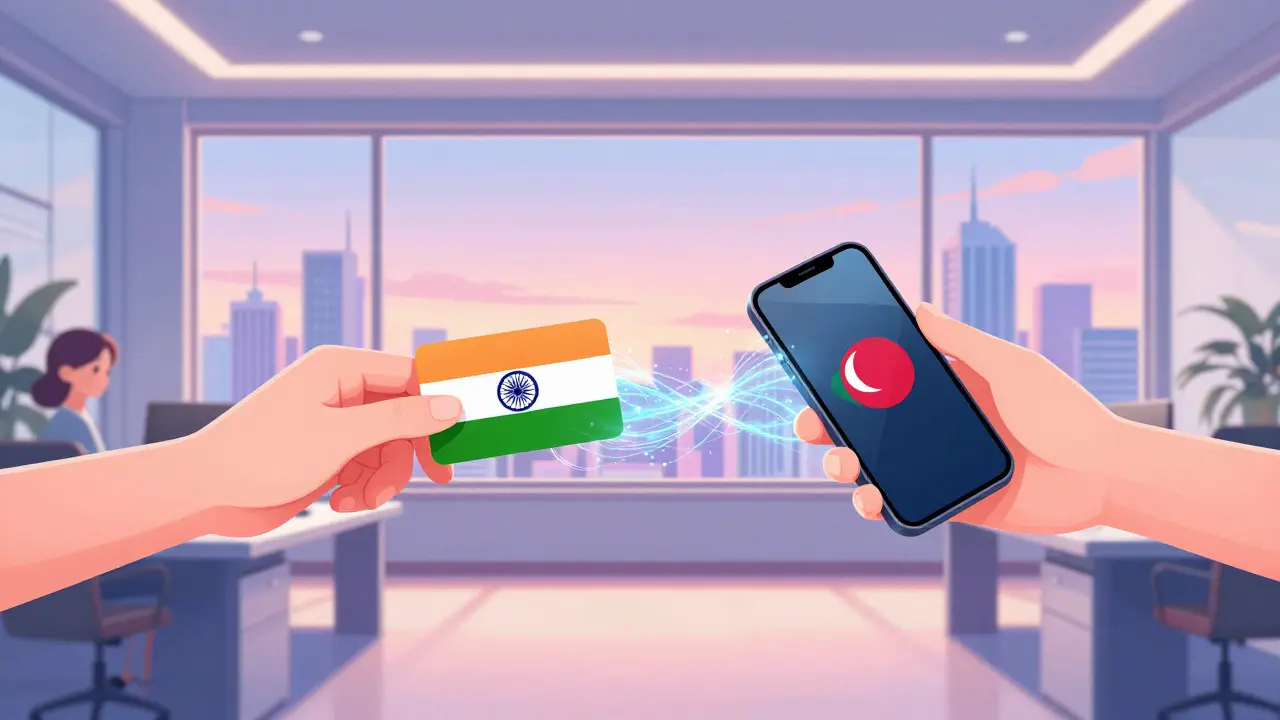
Looking ahead, the trajectory points toward deeper digitization, not decentralization. Bangladesh Bank targets 95 percent digital remittance processing by FY2026-27. A key development is the planned integration with India’s Unified Payments Interface (UPI) system, expected by Q2 2026. This will streamline remittances from India, home to 1.2 million Bangladeshi workers, potentially reducing costs and delays significantly.
Projections vary on long-term growth. The Asian Development Bank expects 15-18 percent growth in FY2026. Optimists within Bangladesh Bank project remittances could reach $40 billion by FY2028, driven by an annual increase of 900,000 migrant workers. Skeptics, however, warn that without addressing structural issues like high transaction costs and limited financial inclusion, growth might plateau around $33-35 billion.
As for crypto, don’t expect a sudden reversal. Governor Dr. Ahsan H. Mansur stated unequivocally in October 2025 that "cryptocurrency has no place in Bangladesh's remittance ecosystem for the foreseeable future." The focus remains on strengthening the fiat-based digital infrastructure, ensuring that every dollar sent home stays within the regulated banking system.
Is it legal to use Bitcoin for remittances in Bangladesh?
No, it is strictly illegal. Bangladesh Bank prohibits all cryptocurrency transactions for remittance purposes under Section 33 of the Foreign Exchange Regulation Act 1947. Recent warnings in 2025 emphasize that facilitators face license revocation and criminal prosecution.
What is the fastest way to send money to Bangladesh right now?
The fastest method is using mobile financial services like bKash or Nagad, or the new 'Remittance Direct' app. With the expanded RTGS system, bank transfers can also take under four hours for 85 percent of transactions, a significant improvement over previous days-long waits.
Why did remittances surge to $30 billion in FY2025?
The surge was driven by market-driven competitive exchange rates offered by banks, which incentivized senders to use official channels. Additionally, strict crackdowns on informal networks like hundi forced funds into the formal banking system, boosting recorded inflows.
Are remittance fees in Bangladesh decreasing?
Average fees remain high at around 6.5 percent, but new initiatives are lowering costs. The 'Remittance Direct' app offers fees as low as 3.8 percent. However, these are still above the World Bank's Sustainable Development Goal target of 3 percent.
Will Bangladesh ever allow crypto for remittances?
It is unlikely in the near future. Central Bank officials have stated that crypto poses risks to monetary sovereignty. The focus is instead on integrating with regional systems like India's UPI and expanding domestic digital payment infrastructure.