
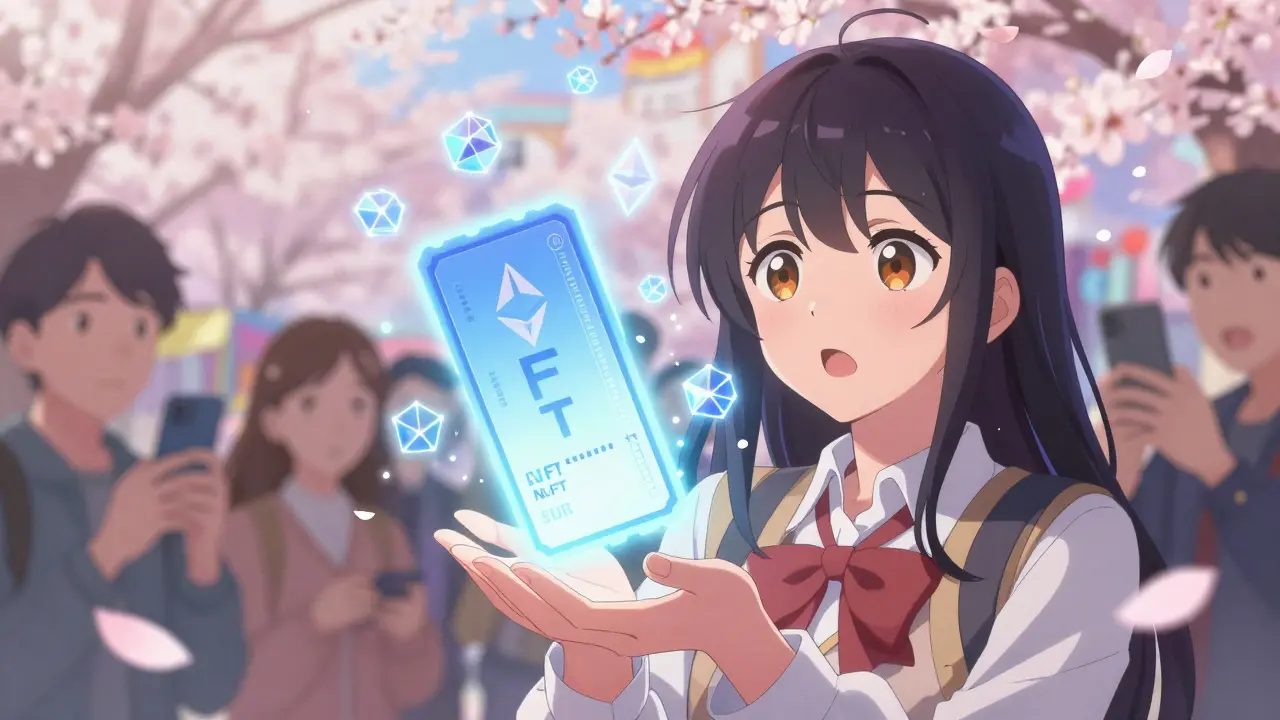
Imagine buying a concert ticket, then selling it later - not through StubHub or Vivid Seats, but directly through your digital wallet. The buyer gets a verified, tamper-proof ticket. The artist gets a cut. No middlemen. No fake tickets. This isn’t science fiction. It’s happening right now, and NFT ticket resale markets are making it real.
What Exactly Is an NFT Ticket?
An NFT ticket is a unique digital token stored on a blockchain. Think of it like a digital collectible, but instead of a pixelated ape, it’s your entry to a live show, sports game, or festival. Unlike traditional paper or PDF tickets, NFT tickets are tied to your crypto wallet. They can’t be copied, forged, or duplicated. Every transfer - whether you’re selling, giving away, or upgrading - is recorded permanently on the blockchain.
These tickets use standards like ERC-721 (mostly on Ethereum) or similar tokens on Polygon and Solana. They’re not just access passes - they’re programmable. That means rules can be built right into them. Want to cap the resale price? Done. Want to give 7% of every resale to the band? That’s automatic. No paperwork. No negotiation. Just code.
How Resale Works - And Why It’s Different
On traditional resale sites, you list your ticket, someone buys it, and the platform takes 10-15%. The artist? They see zero of that money. The original seller might get $150 for a $120 ticket. The platform pockets $20. The band gets nothing.
NFT resale flips that. When you resell your ticket, the smart contract automatically sends a royalty - usually 5-10% - straight to the event organizer or artist. That’s not a one-time deal. Every single time that ticket changes hands, they get paid. Over time, that adds up. By 2034, industry projections estimate NFT ticket royalties could generate over $3.6 billion in ongoing revenue for creators.
Here’s how it works step by step:
- You buy a ticket in your wallet during the initial sale.
- Later, you list it for sale on an NFT marketplace like OpenSea, Ticketed, or a venue-specific platform.
- Someone buys it using crypto (ETH, MATIC, SOL, etc.).
- The smart contract instantly sends your money, minus the royalty fee, to your wallet.
- The royalty fee goes directly to the event organizer.
- The new owner gets a verified ticket with full history - no fraud, no doubt.
This isn’t just convenient. It’s a new revenue stream. For artists and promoters, it turns one-time ticket sales into ongoing income. For fans, it means tickets are real, secure, and tied to exclusive perks - think early access, merch discounts, or even virtual meetups.
Why NFT Tickets Beat Traditional Resale Platforms
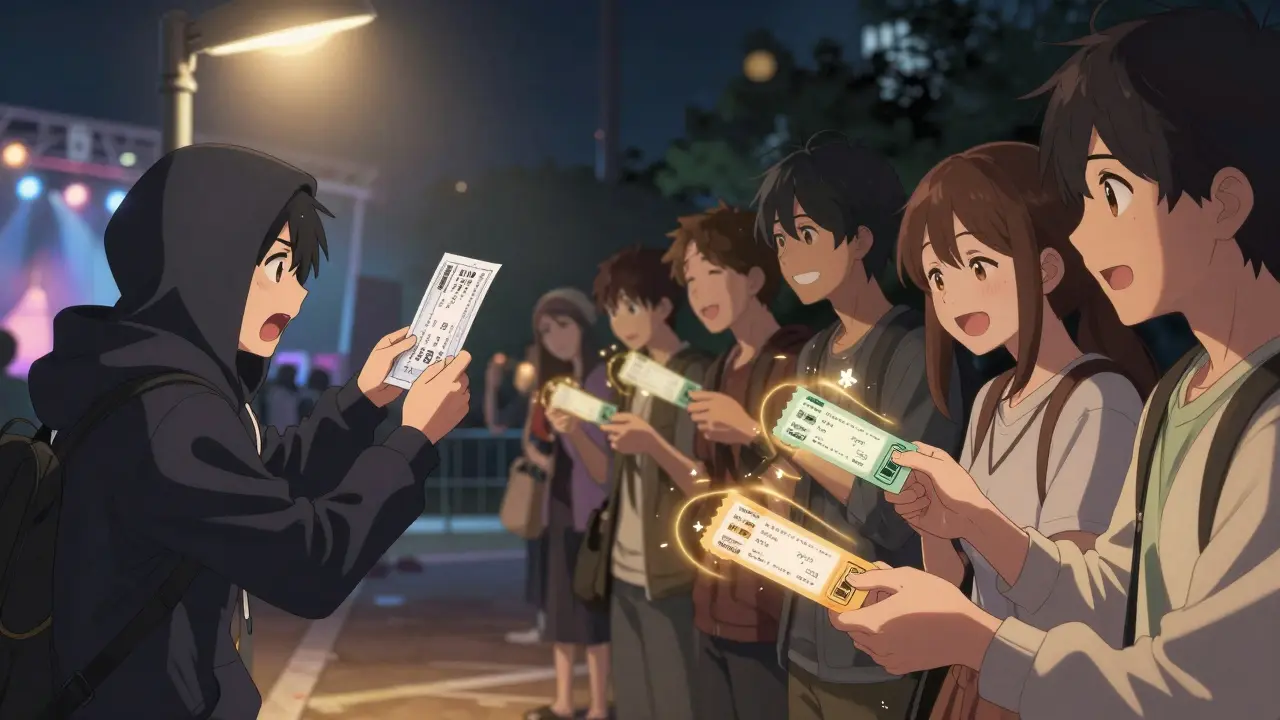
Traditional resale sites have one big flaw: they’re built to profit from chaos. Scalpers buy hundreds of tickets the second they go on sale, then flip them at 3x or 5x the price. Fans pay more. Artists get nothing. The platform? They take their cut and walk away.
NFT ticketing fixes this in three ways:
- No scalping: Smart contracts can block resale until after the event starts, or limit prices to 10% above face value.
- No fakes: Every ticket has a unique ID on the blockchain. You can’t print a fake QR code. You can’t clone a digital token.
- Creator profits: Every resale, no matter how many times it changes hands, gives money back to the original creator.
Take a real example: A rapper drops 5,000 NFT tickets for a tour. Each ticket is $80. 2,000 get resold at $120. With a 7% royalty, the artist earns $16,800 from resales alone - without lifting a finger. That’s not a bonus. That’s a sustainable income model.
The Downsides - And Why They’re Not Dealbreakers
Let’s be honest: NFT ticketing isn’t perfect. There are real problems.
Gas fees. On Ethereum, transaction costs can spike to $20-$50 during peak times. That’s a dealbreaker for a $75 ticket. But platforms are switching to Layer-2 chains like Polygon, where fees are under $0.10. Solana is even cheaper. The tech is evolving fast.
Wallet complexity. If you’ve never used a crypto wallet, setting one up feels like installing a new operating system. You need to back up a 12-word phrase. You need to understand private keys. One wrong move, and you lose your ticket forever. That’s scary. But platforms are building simpler interfaces - think Apple Wallet, but for tickets. No crypto jargon. Just “Buy with Apple Pay or Wallet.”
Adoption. Only 5.3% of major U.S. venues use NFT tickets today. Most fans still use Ticketmaster. But that’s changing. In 2025, 65% of global consumers knew what NFTs were - up from 20% just two years earlier. Younger fans, especially under 30, are already comfortable with digital ownership.
And here’s the kicker: NFT tickets aren’t replacing paper tickets. They’re adding a new layer. Events are going hybrid. You can still get a QR code. But if you want resale rights, perks, or future access, you get the NFT.
Who’s Using It - And Who’s Leading the Way
It’s not just niche artists. Big names are jumping in.
- Drake’s recent tour used NFT tickets with exclusive backstage access.
- NBA teams like the Golden State Warriors and Miami Heat sell limited NFT tickets for premium seating.
- Coachella and Lollapalooza now offer NFT passes with digital collectibles and future discount codes.
- Even Ticketmaster and Eventbrite are testing blockchain integration - not replacing their systems, but layering NFT options on top.
The trend is clear: event organizers are tired of losing money to scalpers. They want control. They want revenue. And they want to build deeper relationships with fans.
NFT tickets aren’t just about money. They’re about loyalty. A fan who holds an NFT ticket from last year’s show gets early access to next year’s. They get a free merch drop. They get invited to a live Discord Q&A. It turns a one-time purchase into a long-term connection.
The Future: Hybrid Systems and Real-World Integration
The next phase isn’t “crypto vs. cash.” It’s “crypto + cash.”
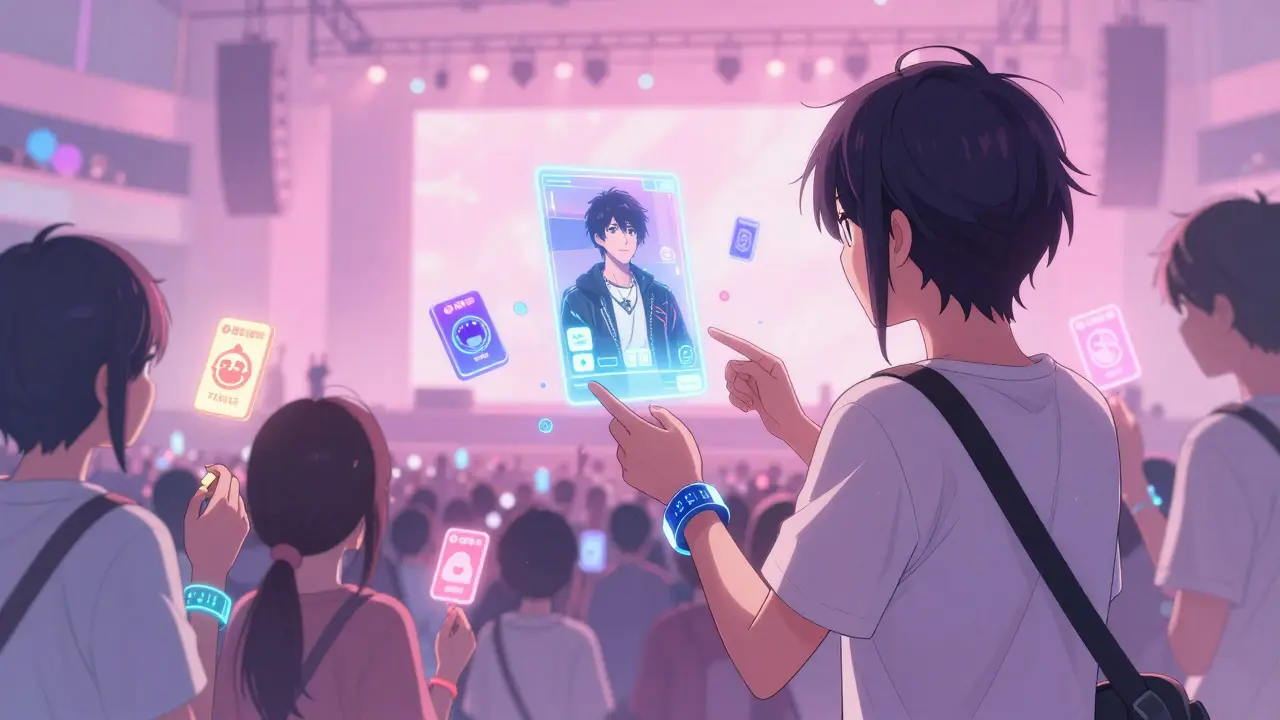
Imagine this: You buy a ticket to a festival. You get a physical wristband at the gate - standard. But you also get a digital NFT in your wallet. That NFT unlocks:
- Exclusive live-streamed afterparties
- Discounts on merch sold on-site
- Early entry to VIP zones
- Access to a virtual concert replay next week
That’s not fantasy. It’s already happening. Platforms are connecting NFTs to real-world access systems - Bluetooth beacons, QR scanners, RFID wristbands. The ticket isn’t just a pass. It’s a key to a whole ecosystem.
And as more people use wallets for payments, rideshares, and even grocery shopping, the barrier to entry drops. Soon, buying an NFT ticket won’t feel like using crypto. It’ll feel like using a loyalty card.
What’s Next?
The NFT ticket resale market hit $1.34 billion in 2025. By 2033, it’s projected to hit $7.82 billion. That’s not a bubble. That’s a shift.
Artists will stop relying on tour profits alone. They’ll earn from every resale. Venues will cut fraud costs. Fans will get better perks and real ownership.
The biggest challenge? Education. If you don’t know how wallets work, you won’t use this. But that’s changing. Every major platform is building simpler on-ramps. Apps are hiding the blockchain. You just tap “Buy” and “Sell.” The tech is working behind the scenes.
This isn’t about replacing the old system. It’s about upgrading it. NFT ticket resale isn’t just a new way to sell tickets. It’s a new way to value live experiences - for artists, fans, and everyone in between.
Can I resell my NFT ticket for any price I want?
No. The event organizer sets resale rules when the ticket is created. These can include price caps (e.g., max 10% above face value), time restrictions (e.g., can’t resell until 24 hours after the event starts), or even who can buy it (e.g., only verified fans). Smart contracts enforce these rules automatically - no exceptions.
Do I need cryptocurrency to buy or sell NFT tickets?
Not always. Many platforms now let you buy NFT tickets with credit cards, Apple Pay, or Google Pay. The crypto part happens behind the scenes. But if you want to resell the ticket, you’ll need a wallet to receive the funds - usually in ETH, MATIC, or SOL. Some platforms auto-convert that to fiat, so you can get cash in your bank.
What happens if I lose my wallet or private key?
If you lose your private key, you lose access to your NFT ticket - just like losing a physical ticket. There’s no “forgot password” button on the blockchain. That’s why reputable platforms now offer wallet recovery options, like multi-sig recovery or backup through trusted contacts. Always store your keys securely - never screenshot them or store them online.
Are NFT tickets better for the environment than paper tickets?
It depends. Older blockchains like Ethereum used to consume a lot of energy. But most NFT ticketing now runs on eco-friendly chains like Polygon or Solana, which use 99% less energy than Bitcoin. Paper tickets require printing, shipping, and disposal - which also has a carbon footprint. Digital tickets eliminate physical waste. The environmental impact is generally lower, especially on modern blockchains.
Can I use my NFT ticket for multiple events?
Usually not - each NFT ticket is tied to one specific event. But some organizers issue “season passes” as NFTs that grant access to multiple shows. These are rare, but growing. More commonly, holding one NFT ticket gives you perks (like discounts or early access) for future events, even if the ticket itself isn’t reusable.
Neeti Sharma
NFT tickets? lol India still cant even fix bus schedules but u wanna sell digital concert passes? 😒
Fiona Monroe
The architectural integrity of this system is fundamentally sound. By embedding royalty structures directly into the token metadata via ERC-721-compliant smart contracts, creators achieve unprecedented fiscal sovereignty. This is not merely an innovation-it is a structural reconfiguration of cultural commodification.
Lucy Simmonds
Wait wait wait... so you're telling me the government isn't tracking these? And crypto wallets? What if the Feds freeze them? What if the blockchain gets hacked? What if THEY use this to implant chips?? I read a guy on TruthSocial who said this is how they'll take your soul...
Maggie House
I love this idea so much!! I just got my first crypto wallet yesterday and I'm so excited to buy my first NFT ticket!! 🥳 I didn't even know you could do this!!
Dana Sikand
This is the future and you know it. Imagine your favorite band knowing you showed up to every show because your ticket history is locked in forever. No more shady scalpers. No more fake tickets. Just real connection. I cried the first time I resold a ticket and saw the artist get paid. It felt right.
Elizabeth Smith
People think this is freedom but its just another way to trap you in the matrix. You think you own something but really the algorithm owns you. You're just a data point now. Your wallet. Your ticket. Your soul. All tracked. All sold. All monitored.
Robert Kromberg
I get both sides. The tech is cool but the onboarding is brutal. I tried helping my mom buy one and she almost called the police. Maybe we need a middle ground-not crypto or bust.
Curtis Dunnett-Jones
The economic paradigm shift enabled by programmable royalties represents a quantum leap in creator compensation. Unlike legacy intermediaries, blockchain infrastructure ensures perpetual value accrual, thereby aligning incentive structures with long-term artistic sustainability. This is not merely disruptive-it is evolutionary.
Felicia Eriksson
I bought a ticket last month. Got a free digital poster and a Discord invite. Didn't even know I wanted it until I got it. Kinda nice.
Patrick Streeb
The technical implementation of smart contract-based ticketing, particularly on Layer-2 networks such as Polygon, demonstrates a commendable alignment between environmental sustainability and economic efficiency. This model reduces transactional friction while simultaneously minimizing carbon footprint.
Tracy Whetsel
You know what’s beautiful? When your ticket isn’t just a pass… it’s a memory. 🌟 I still have my first NFT ticket from last year. It’s in my wallet like a little keepsake. And when they sent me a free merch drop? I cried. Not because I got stuff… but because they remembered me.
Tanvi Atal
Another tech bro fantasy. Real people need paper tickets. You think your wallet is safe? Bro your keys got leaked last week. And now your Beyoncé ticket is gone. LOL.
Colin Lethem
I tried to sell my ticket on OpenSea and the gas fee was $40. The ticket was $80. So I just kept it. What a joke. This isn’t for regular people.
Kaitlyn Clark
I LOVE this so much!!! My friend got a free hoodie because she held her NFT ticket from last year. I just bought my first one with Apple Pay!! 🤩 I didn’t even need crypto! It’s so easy now!!!
Michelle Xu
The integration of blockchain-based ticketing into existing event infrastructure requires careful calibration. While the benefits of transparency and programmable royalties are evident, the user experience must remain frictionless. Adoption hinges on abstraction, not education.
Amanda Markwick
This isn't just about money. It's about belonging. When you hold an NFT ticket, you're not just a fan-you're part of the story. The artist sees you. The system remembers you. That’s power. That’s connection. That’s what live events were meant to be.
Sriharsha Majety
i dont get why people make it so hard. just let me buy a ticket like normal. why do i need a wallet. why do i need to know what erc 721 is. its just a concert bro
Derek Sasser
I’ve been using NFT tickets for a year now. The only thing that sucks is when my phone dies. Then I’m stuck. But the perks? Worth it. I got into a VIP lounge once just because I held last year’s ticket. No one else even knew.
Nadia Shalaby
I saw a guy get scammed last week. Bought a fake NFT ticket. Thought it was real. Lost $200. Still don’t get why people don’t just use Ticketmaster.
John Fuller
Gas fees kill this. End of story.
Daisy Boliaan
I swear this is how they’re going to take over the world. First NFT tickets. Then NFT IDs. Then NFT voting. Then NFT babies. I’m not kidding. I saw a documentary. It’s happening. They’re using your love of music to trap you. You think you’re a fan? You’re a data slave.
Jessica Carvajal montiel
You think this is progress? It’s just capitalism with better PR. Artists get pennies. Platforms get rich. You think you’re owning something? You’re just renting a digital ghost. And don’t even get me started on how they’re using this to track your location and buying habits. You’re not a fan. You’re a product.
maya keta
If you're not using Solana or Polygon, you're literally part of the problem. Ethereum is a relic. And if you still think paper tickets are 'real', you're living in 2012. NFTs aren't a trend-they're the new infrastructure. Get. With. It.
bella gonzales
I just want to go to a concert without feeling like I'm being watched... why does every ticket need to be a spy gadget? Why does every resale need to be tracked? Why does every little thing have to be monetized? I just want to enjoy music...