
Imagine showing up to a concert, festival, or sports game with your phone, tapping a button, and walking straight through the gate-no scanning, no waiting, no fake tickets. That’s not science fiction anymore. In 2026, blockchain-based event ticketing isn’t just a cool idea-it’s becoming the standard for major events, and it’s solving real problems that have plagued the industry for decades.
Why Traditional Ticketing Still Fails
For years, event organizers have dealt with the same nightmares: scalpers buying up thousands of tickets the moment they go on sale, then reselling them for triple the price. Counterfeit tickets flood the secondary market. Fans get scammed. Organizers lose millions in revenue. Even big names like Coachella and FIFA have struggled to keep control of who gets in and at what price. Traditional online ticketing platforms like Ticketmaster or Eventbrite have tried to fix this with CAPTCHAs, purchase limits, and VIP presales. But none of these stop determined scalpers with bots. And when a fan buys a fake ticket from a shady site, there’s no way to prove it’s invalid until they’re turned away at the gate. That’s not just frustrating-it’s dangerous.How Blockchain Fixes These Problems
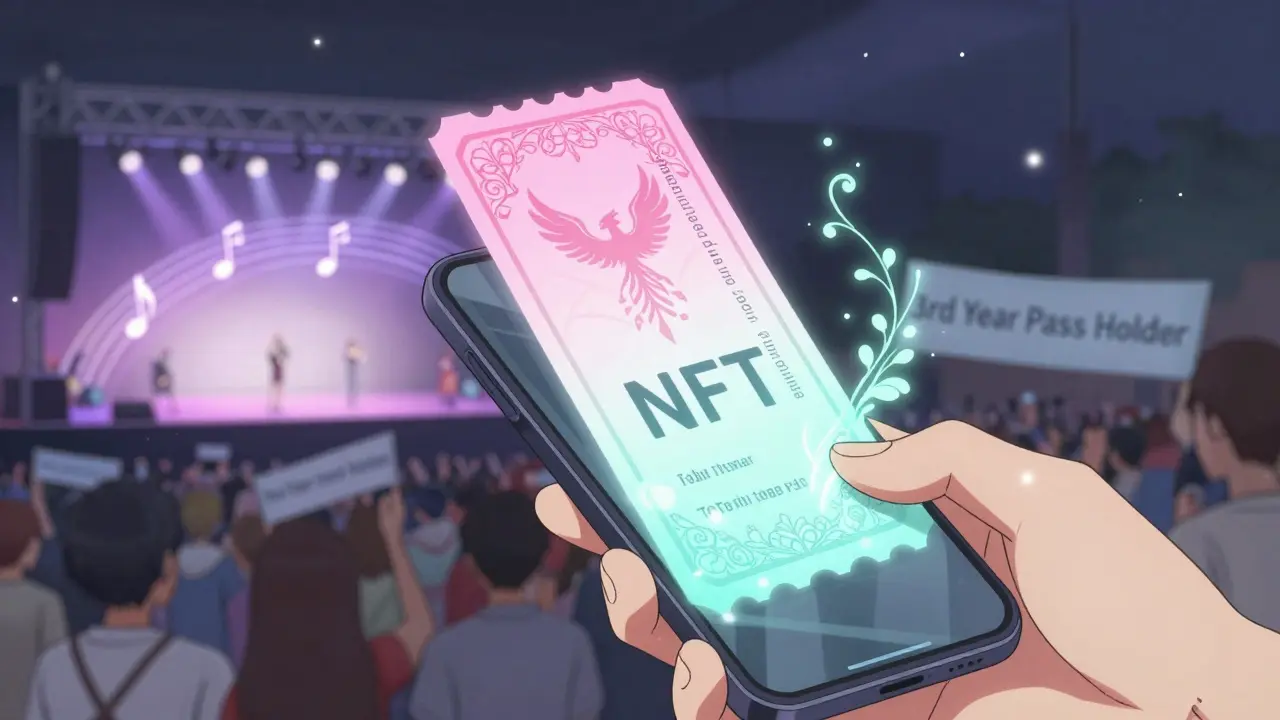
Blockchain ticketing changes everything by making each ticket a unique, tamper-proof digital asset. Instead of a PDF or barcode you can screenshot, your ticket becomes an NFT-a non-fungible token-stored in your digital wallet. This means:- No counterfeits: Every ticket has a unique cryptographic signature. If it’s not on the blockchain, it doesn’t exist.
- Controlled resales: Organizers can set rules. Want to cap resale prices at 10% above face value? Done. Want to block resales entirely? Easy. You own the rules.
- Automatic royalties: Every time a ticket gets resold, the original seller (artist, team, venue) gets a cut-no middlemen, no lost revenue.
- Real-time verification: At the gate, staff scan a QR code that checks the blockchain instantly. No database to hack, no lag, no errors.
NFT Tickets Aren’t Just for VIPs Anymore
Many people still think blockchain tickets are only for collectors or crypto fans. That’s outdated. In 2026, NFT tickets are being used for everything:- Concerts: Artists like Tame Impala and Billie Eilish now offer NFT tickets that unlock exclusive backstage videos, merch drops, and early access to future shows.
- Sports: The AFL and NRL have tested blockchain tickets for finals games. Fans who hold the ticket for three consecutive years get a lifetime pass.
- Festivals: Coachella didn’t just sell NFTs as collectibles-they used them as access passes. Holders of the 2022 Coachella Keys got automatic entry, VIP dinners, and front-row seating every year since. In 2025, they expanded it to include 10,000 general admission NFTs with unique digital art tied to each ticket.
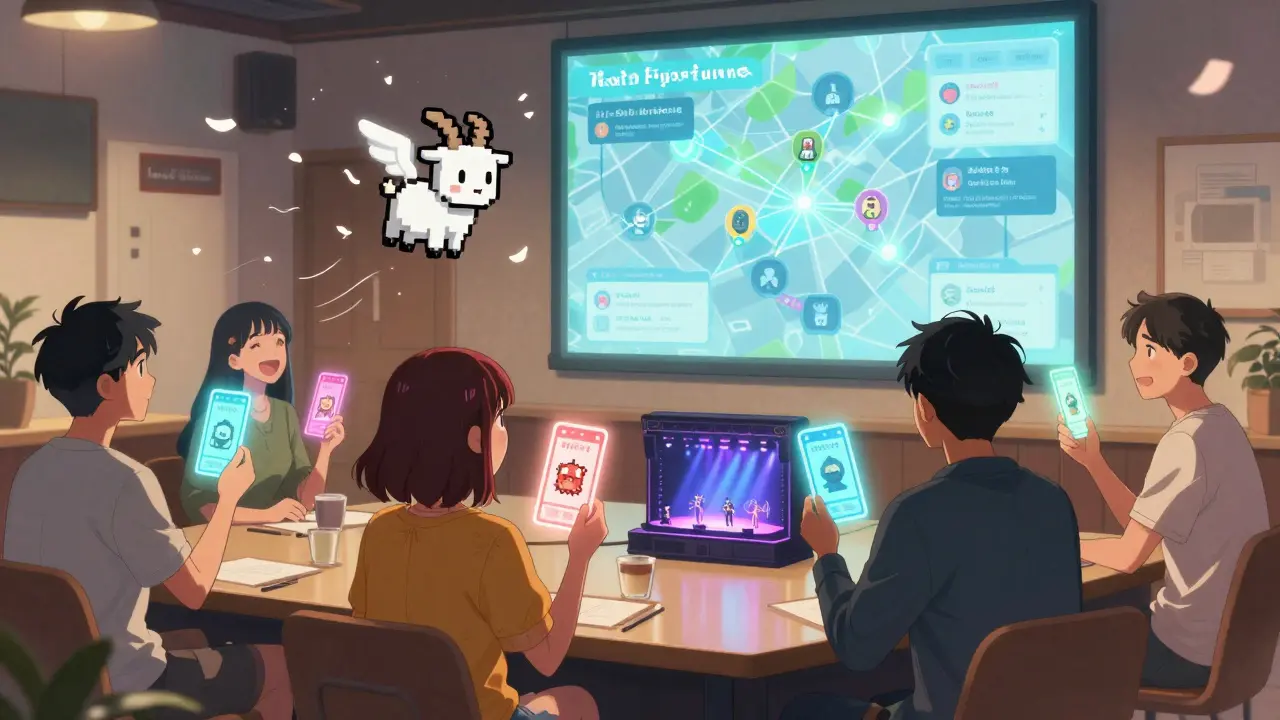
- Rural events: A pumpkin farm in Western Australia now sells seasonal harvest tickets as NFTs. Buyers get a digital badge, a discount on next year’s tickets, and a free photo with the farm’s goats. Attendance jumped 67%.
The Hidden Tech Behind the Scenes
It’s not magic. It’s code. Here’s what’s really happening:- Smart contracts: These are self-executing rules written into the blockchain. Example: "If ticket is resold, 15% goes to the artist. Only one resale allowed. Price cannot exceed $150."
- IPFS storage: Your ticket’s digital art, access details, and event info are stored on the InterPlanetary File System-not a central server. Even if the ticketing site goes down, your ticket still works.
- QR + blockchain sync: The QR code you scan at the gate doesn’t just show a number. It checks the blockchain in real time to confirm: Is this ticket valid? Has it been used? Was it resold legally?
- Mobile-only access: No paper. No email. Your ticket lives in your phone wallet. No screenshots allowed. No copying.
Why Not Everyone Is Jumping In
Let’s be honest-blockchain ticketing isn’t perfect. Many fans still don’t understand wallets, seed phrases, or how to buy an NFT. A 2025 survey by EventTech Insights found that 42% of attendees under 40 were willing to try it, but only 18% felt confident doing it without help. That’s why the smartest event organizers aren’t going all-in. They’re using hybrid models:- Offer both traditional e-tickets and blockchain NFT tickets side by side.
- Use blockchain for premium tiers first-VIP, backstage, season passes.
- Provide in-app guides, video tutorials, and live chat support for first-time users.
What’s Next? Beyond Tickets
The real future isn’t just about getting in. It’s about what happens after. Imagine this:- You buy an NFT ticket to a music festival. Later, you get a digital badge in your wallet that unlocks a special playlist, a behind-the-scenes documentary, and a discount on merch.
- You attend a conference. Your NFT ticket gives you access to a private Discord channel with speakers, and you earn points for attending panels that you can trade for future event discounts.
- You go to a themed attraction. Your ticket becomes a collectible digital souvenir-a pixel art version of the ride you rode-that you can show off, trade, or even sell later.
Is Blockchain the Only Answer?
No. Digital ticketing with encrypted barcodes and AI fraud detection is already improving. Some platforms offer resale caps and verified resellers without blockchain. But blockchain is the only system that gives organizers full control, guarantees authenticity, and turns every ticket into a long-term relationship with the fan. It’s not about replacing digital tickets-it’s about upgrading them. The trend is clear: Events that use blockchain ticketing see 30-50% higher fan retention, 20% more resale revenue (going to the organizer, not scalpers), and 80% fewer fraud complaints.What Should You Do?
If you’re an event organizer:- Start small. Pick one event. Try blockchain for VIP tickets only.
- Partner with a platform like Tixbase, Oveit, or B.A.M Ticketing-they handle the tech.
- Train your staff. Teach your fans. Use simple language: "Your ticket is a digital key. No copying. No fake tickets. Ever."
- Try buying one NFT ticket. You don’t need crypto upfront-many platforms let you pay with credit card.
- Keep your ticket in a wallet app like MetaMask or the one provided by the event.
- See what extra perks you get. You might be surprised.
Are blockchain tickets only for crypto users?
No. Most blockchain ticketing platforms now let you pay with credit cards, Apple Pay, or Google Pay. You don’t need to own Bitcoin or Ethereum. You just need to download a simple app and create a digital wallet-no technical skills required. The platform handles the blockchain part behind the scenes.
Can I resell my blockchain ticket?
Yes-but only if the event organizer allows it. Unlike traditional ticketing, where scalpers run wild, blockchain lets the organizer set rules. They can allow resale, set a max price, or block it entirely. Any resale happens on a verified marketplace, and the original seller gets a cut automatically.
What if I lose my phone with my blockchain ticket?
If you backed up your wallet with a recovery phrase (usually 12-24 words), you can restore your ticket on any new device. Most platforms also offer customer support to help you recover access if you’ve lost your phone and backup. Your ticket is tied to your wallet address, not your phone-so you’re not locked out.
Do blockchain tickets work offline?
Yes. Your ticket is stored in your phone’s wallet app. The QR code at the gate is generated locally and works without internet. The event staff only need to scan it-their device checks the blockchain in real time, but your phone doesn’t need to be online. This makes it reliable even in crowded venues with poor signal.
Is blockchain ticketing more expensive?
Not for fans. Most platforms absorb the blockchain fees (gas fees) into the ticket price or cover them entirely. For organizers, it’s cheaper long-term. No more paying third-party resellers, no fraud losses, and no expensive software updates. Many report a 25-40% reduction in operational costs within the first year.
Blockchain ticketing isn’t about replacing the old system. It’s about fixing what was broken. And in 2026, it’s working.
rajan gupta
This is literally the future we’ve been praying for 🙏😭 No more scalpers stealing our dreams. I cried when I got my NFT ticket to Tame Impala last year. It came with a 30-second clip of Kevin playing guitar in his underwear. I’ll never forget it.
Also, my wallet is now my soul. And it’s beautiful.
Billy Karna
The real breakthrough here isn’t the NFTs-it’s the smart contracts. You’re talking about programmable economics at scale. Every resale royalty, every access tier, every conditional unlock is code enforcing fairness. That’s not just tech-that’s a new social contract between creators and fans.
And yes, the IPFS storage layer is genius. It means your ticket survives the collapse of the ticketing company. If Tixbase goes bankrupt tomorrow, your ticket still works. That’s resilience. That’s ownership.
The only thing missing? Standardization. Right now, every platform uses its own blockchain or token standard. We need an open protocol-like how HTTP unified the web. Otherwise, we’re just building walled gardens with fancier bricks.
Cheri Farnsworth
I am so impressed by the innovation here. The way organizers are reclaiming control over their events is nothing short of revolutionary.
The fact that royalties are automatically distributed through smart contracts eliminates the exploitation that has long defined the live events industry.
This is not just a technical upgrade. It is a moral one.
Gene Inoue
Let’s be real-this is just crypto bros repackaging their pyramid scheme as ‘fairness.’ You think a pumpkin farm in Australia giving out goat photos is proof this works? That’s not innovation-that’s a meme with a blockchain sticker on it.
And don’t get me started on ‘mobile-only access.’ What about seniors? What about people who don’t own iPhones? You’re excluding entire demographics because you think tech = progress.
Ricky Fairlamb
The fact that you’re celebrating this as ‘fairness’ proves you haven’t read the white papers. Blockchain ticketing is a surveillance tool disguised as liberation. Every transaction is permanently recorded. Every resale tracked. Every fan’s behavior monetized.
And you think the artist gets a cut? Nah. The platform does. They’re just taking a 15% cut instead of Ticketmaster’s 30%. It’s the same scam, just with more Ethereum.
Also, QR codes don’t work offline. They need to sync with a node. You’re being sold a fantasy.
Arlene Miles
You’re right to call this a shift toward belonging. But let’s not pretend it’s all sunshine. The real challenge? Onboarding. People aren’t lazy-they’re overwhelmed.
We need to stop treating blockchain like a magic button. It’s a new language. And like any language, it needs patience, translation, and community.
Start with one event. Let someone’s first NFT ticket be a gift. Let them feel the joy before they fear the tech. That’s how change sticks.
Patty Atima
I bought my first NFT ticket last month. Got in. Got a free digital poster. Didn’t need to understand crypto. It just worked. 🤷♀️
Lucy de Gruchy
This is a government-backed crypto plot. Did you know that Avalanche L1 is partially funded by venture capital firms with ties to the Pentagon?
And ‘no counterfeits’? Ha. The blockchain is immutable, yes-but the wallet keys aren’t. Someone steals your phone, they steal your ticket. Then they sell it on the dark web.
The ‘zero fraud’ claims? They’re cooked. Tixbase had a data leak last year. It was buried under a press release.
Lauren J. Walter
So… I’m supposed to care about a digital goat photo?
I went to a festival last year and got sprayed with sunscreen by a stranger. That was real. This? This is a TikTok trend with a blockchain tag.
Ernestine La Baronne Orange
I’ve been waiting for this my whole life. Finally, someone’s listening!
I lost my ticket to Coachella in 2019 because I screenshot it. I cried for three days. I even wrote a poem about it.
Now? I have a wallet. I have a key. I have dignity.
And when I resold my ticket for $120 (face value: $100), the artist got $18. I didn’t get rich. But I didn’t feel guilty. That’s the difference.
I’m not a crypto bro. I’m a mom who likes indie rock. And I finally feel like I belong.
I cried again. This time, it was happy tears.
Manali Sovani
This is not progress. This is exclusion disguised as innovation.
The world is not ready for blockchain ticketing. Most people do not understand wallets. Most people do not want to understand wallets.
This is not for the people. This is for the tech elite.
And the pumpkin farm? That is not a success. That is a clown show.
Konakuze Christopher
NFT tickets? More like NFT scams. You think this stops scalpers? Nah. It just moves them to the blockchain.
And ‘mobile-only’? That’s a trap. You think your phone won’t die? You think your battery won’t drain? You think your screen won’t crack?
This isn’t the future. It’s a glitch.
S F
America built the greatest events in the world. Now we’re handing them over to crypto bros and their ‘smart contracts.’
This isn’t innovation. It’s surrender.
Angelica Stovall
This is all a lie. The blockchain doesn’t prevent fraud. It just hides it better.
Who owns the nodes? Who audits the contracts? Who’s checking that the artist actually gets the 15%?
The same people who ran Ticketmaster. Just with more jargon.
Taylor Holloman.
I’ve been to 47 concerts since 2020.
Three of them used blockchain tickets.
Two were flawless. One had a glitch where the QR code didn’t load-so they let me in manually. No drama.
The point isn’t perfection. It’s progress.
The system’s not magic. But it’s better than the last 20 years of chaos.
And yeah, I got a pixel art of the band’s drummer holding a taco. I framed it.
Bryan Roth
I’ve spent years working with event teams who are terrified of tech. They’re not lazy. They’re scared.
But when you show them what blockchain actually does-no fake tickets, real royalties, fans who feel seen-they light up.
It’s not about the tech. It’s about the trust.
Start small. Celebrate the wins. Let people feel it before they fear it.
This isn’t a revolution. It’s a repair.
shreya gupta
The pumpkin farm incident is a tragic example of how technology is being misapplied to trivial matters.
This is not innovation. It is performative absurdity.
Derek Lynch
I love how this turns tickets into heirlooms. My kid now has a digital badge from the 2025 Coachella. He doesn’t know what NFTs are-but he knows he got in because his ticket was special.
That’s the real win. Not the tech. The story.
Robert Kunze
i got my first nft ticket last week and it was so easy. i paid with apple pay. no crypto. no wallet setup. just tapped and went. the qr code worked even with my phone at 3% battery. i was like… wait this is actually better than before?
maybe i was wrong about this whole thing.
rajan gupta
I saw someone’s comment say ‘mobile-only’ is exclusionary.
But what’s more exclusionary? A 200-year-old system where your ticket gets stolen, sold, or faked before you even leave your house?
We’re not asking people to become coders. We’re asking them to use a phone.
That’s not exclusion. That’s evolution.