
When New Brunswick shut down new cryptocurrency mining connections in 2023, it didn’t just make a policy change - it sent a clear message: electricity isn’t for sale to energy-hungry Bitcoin mines. This isn’t a temporary pause. It’s a full stop. And it’s one of the strictest moves any Canadian province has made against crypto mining.
Why New Brunswick Said No
Back in March 2022, the provincial government quietly ordered NB Power, the Crown-owned utility, to stop taking new requests for electricity from crypto mining operations. At first, it looked like a delay. But by November 2023, that pause became a permanent ban. No new mines. No expansions. No exceptions. The reason? Simple: the grid couldn’t handle it. New Brunswick relies heavily on hydroelectric power, which is clean and renewable - but it’s not infinite. When crypto mining companies started showing up with requests for tens or even hundreds of megawatts, officials realized these operations could swallow up a huge chunk of the province’s total power supply. Think about it this way: in 2022, Manitoba Hydro estimated that just the crypto miners who had already expressed interest could have added 4,600 megawatts of demand. Manitoba’s total grid capacity at the time was 6,100 megawatts. That’s over 75% of the entire province’s power going to machines that only exist to solve math problems. New Brunswick saw the same risk - and chose to protect its residents’ electricity instead.What the Ban Actually Covers
This isn’t just about new mines. The moratorium blocks everything:- New crypto mining facilities trying to connect to the grid
- Existing mines trying to add more machines or expand their power use
- Any request for increased electricity supply tied to cryptocurrency operations
How It Compares to Other Provinces
New Brunswick isn’t alone in cracking down - but it’s the most extreme.- Manitoba extended its ban until April 2026, but it’s still temporary. They’re watching, waiting, and might reconsider.
- British Columbia passed Bill 24 to give BC Hydro legal power to cap crypto mining usage. They even won a court case against a mining company trying to force more power access.
- Hydro-Québec raised rates and capped allocations, making mining less profitable without outright banning it.
- Alberta is the opposite. With deregulated energy and pro-mining policies, it became Canada’s crypto mining hub after China’s 2021 ban.
The Bigger Picture: Energy, Environment, and Equity
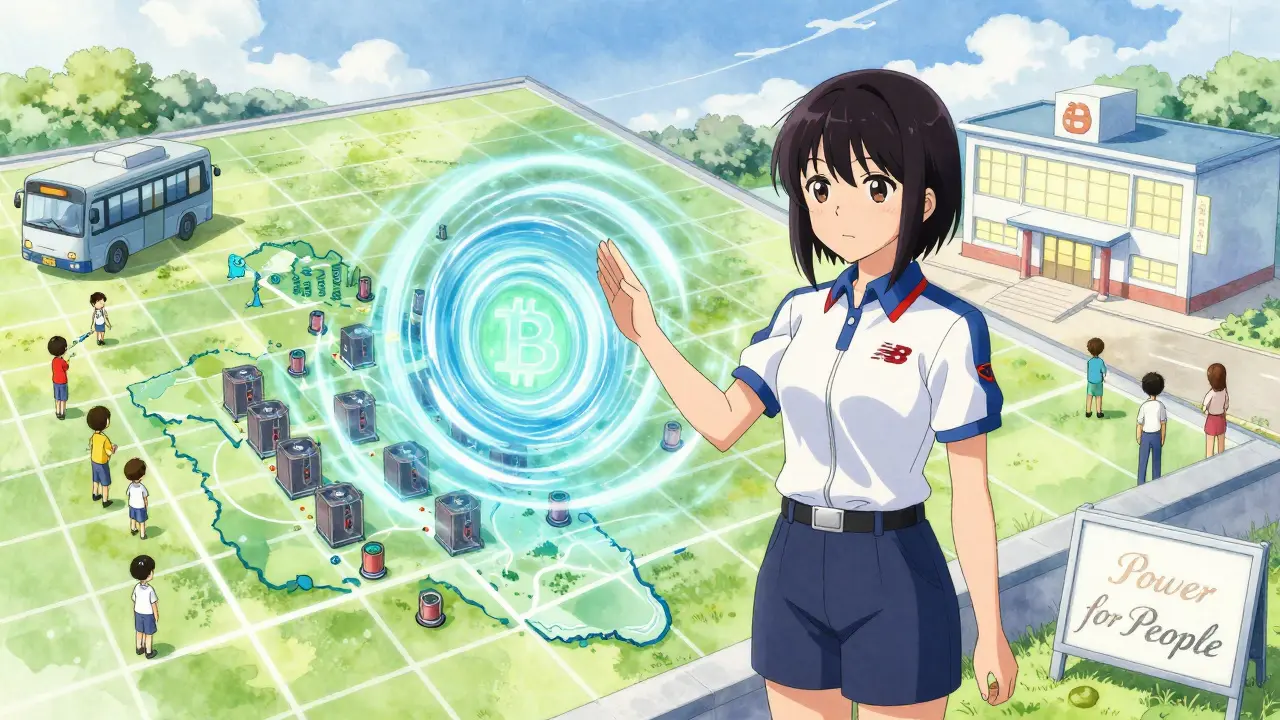
This isn’t just about crypto. It’s about who gets to use limited public resources. Electricity is a public good. When a mining operation draws 50 megawatts from the grid, that’s 50 megawatts that can’t go to homes, hospitals, or electric buses. In a province with aging infrastructure and rising energy costs, that’s a hard trade-off. Globally, at least eight countries have banned crypto mining outright. China’s 2021 shutdown - which kicked out 75% of the world’s Bitcoin miners - forced the industry to scatter. Many moved to North America. But now, even places with cheap hydro power are saying no. The environmental argument is clear: Bitcoin mining uses more electricity annually than entire countries like Argentina or the Netherlands. That’s not sustainable. And as governments push to electrify transportation and heating to fight climate change, diverting power to mining machines looks increasingly irresponsible.
What’s Happening Now?
The ban has already reshaped the industry. Miners who once targeted New Brunswick for its clean, low-cost hydro power are now looking elsewhere. Alberta is the main winner - its deregulated market and pro-business attitude make it the go-to spot for crypto operators in Canada. Some have even moved to the U.S., where states like Texas and Georgia offer cheap power and fewer restrictions. Existing mines in New Brunswick? They’re stuck. They can’t grow. They can’t upgrade. If they break down, they can’t replace equipment without needing more power - which is now off-limits. Many are quietly shutting down or downsizing. The ripple effect? Electricity prices in New Brunswick have stayed stable. Residential rates haven’t spiked. The grid hasn’t overloaded. And for residents, that’s what matters.What’s Next?
There’s no sign the ban will lift. No committee is reviewing it. No politician is pushing to change it. The government’s stance is clear: protecting the grid is more important than attracting a volatile, high-risk industry. If crypto mining technology changes - say, if a new consensus method uses 90% less power - the ban might be reconsidered. But for now, Proof of Work mining remains a relic that New Brunswick refuses to support. This isn’t a fight against Bitcoin. It’s a fight for fairness. It’s about making sure public infrastructure serves the public - not a handful of companies running servers 24/7 for profit. The rest of Canada is watching. If New Brunswick’s model works - stable power, no rate hikes, no grid stress - more provinces may follow. The message is simple: if your business needs more electricity than a city, you don’t get to take it from the people who need it most.Is crypto mining completely banned in New Brunswick?
Yes, but only for new operations and expansions. Existing mines can still operate at their current power levels, but they cannot increase their electricity use or add more mining hardware. No new crypto mining facilities are allowed to connect to NB Power’s grid under any circumstances.
Why did New Brunswick target crypto mining specifically?
Crypto mining, especially Bitcoin mining using Proof of Work, consumes massive amounts of electricity - often more than entire towns. With limited hydroelectric capacity and rising residential energy costs, the province decided to prioritize stable, affordable power for households and essential services over energy-intensive industrial operations.
Can crypto miners still operate in New Brunswick if they use solar or wind power?
No. The ban applies regardless of the power source. Even if a mining operation uses its own renewable generators, it still needs to connect to the provincial grid for backup, cooling, and grid services. All grid connection requests from crypto mining operations are refused, whether they’re fully off-grid or partially dependent on NB Power.
How does this affect electricity prices for regular residents?
It’s helped keep them stable. By blocking massive, unpredictable electricity demands from mining operations, New Brunswick avoided the kind of rate spikes seen in other regions where crypto miners overwhelmed the grid. Residents haven’t faced emergency rate hikes or rolling blackouts linked to mining demand.
Is there any chance the ban will be lifted in the future?
There’s no official timeline or review process. The moratorium is indefinite, and provincial officials have not signaled any intention to reverse it. Unless there’s a major shift in mining technology - like a dramatic drop in energy use - or a significant increase in provincial power generation capacity, the ban is likely to remain in place indefinitely.
Michael Suttle
This is just the beginning. 🤔 They think they're protecting the grid? Nah. This is a cover-up for Big Energy to keep their fossil fuel monopolies alive. Crypto miners are the future. The grid? It's a relic. They're scared. They know Bitcoin is the real power. And they can't control it. 💥
Jenni James
One must observe, with a certain degree of academic rigor, that the provincial authorities have enacted a policy of unprecedented clarity and moral conviction. The decision, while seemingly austere, is, in fact, a triumph of public utility over speculative capital. One wonders, however, whether the term 'Proof of Work' might be more accurately described as 'Proof of Waste.'
Alex Thorn
Let’s be honest here: electricity is not a commodity to be auctioned off to the highest bidder. It’s a public trust. And when you’re talking about mining operations that consume more power than entire cities-well, that’s not innovation. That’s extraction. And extraction without consent? That’s not capitalism. That’s feudalism with servers. We’re not just talking about power grids. We’re talking about values. And New Brunswick? They got the values right.
Howard Headlee
THIS IS WHAT WE’VE BEEN WAITING FOR! Finally, someone had the guts to say NO! Crypto miners were turning provinces into data center graveyards while families got slapped with rate hikes. New Brunswick didn’t just make a policy-they made a statement. And that statement? It’s loud. It’s clear. It’s FIERCE. Let’s hear it for the people over the profit machines! 🙌🔥
Grace van Gent-Korver
I come from India where we have blackouts every summer. I don't understand how anyone can think it's okay to use power meant for hospitals and schools to run machines that make digital coins. This makes sense. Simple. Right.
Zephora Zonum
It’s fascinating how the narrative has shifted from energy equity to anti crypto sentiment. One wonders if this isn’t just a thinly veiled attempt to suppress decentralization. After all, if the people had access to their own energy infrastructure, they might not need the state at all. And that… is the real threat.
Douglas Anderson
I used to work for a utility company in Montana. We had a crypto miner try to hook up 120MW. We had to shut it down because it was going to cause cascading failures. New Brunswick didn’t overreact. They just did their job. The grid isn’t infinite. People need heat. Kids need lights. Miners? They can go where the power is cheap and the rules are lax. That’s capitalism. Not a right.
vasantharaj Rajagopal
The technical architecture of Proof-of-Work consensus mechanisms presents an inherent inefficiency at scale, particularly when juxtaposed against renewable energy generation profiles. The load variance introduced by ASIC-based mining operations creates non-linear stress on hydroelectric baseload systems, which are inherently inflexible in ramp-up/down cycles. Consequently, the moratorium is not merely a regulatory intervention-it is a systemic necessity.
ann neumann
They don’t want you to know this but the real reason they banned it is because the government is in bed with Big Oil and they’re terrified that if people start using decentralized energy and mining, they’ll lose control. They’re scared. Scared that we’ll find out we don’t need them. That we can power our own homes. That we can be free. And they’d rather keep us in the dark. Literally. And they’ll do anything to keep it that way. Don’t let them win.
William Montgomery
If you’re using electricity to mine crypto, you’re not contributing. You’re consuming. And when the lights go out in a nursing home because your rig ate the grid, you don’t get to say ‘it’s just business.’ That’s not freedom. That’s theft.
Allison Davis
The fact that this ban is indefinite is actually the most responsible part. No loopholes. No waiting. No ‘let’s study it for a year.’ They saw the problem, understood the stakes, and acted. That’s leadership. Not perfect, but real. And real leadership is rare.
Tom Jewell
There’s something almost poetic about it. A province built on rivers, wind, and quiet resilience saying: ‘We don’t trade our soul for a digital ledger.’ Bitcoin mining is the last gasp of industrial-age greed-burning energy like it’s endless. But here? They chose the slow hum of a home heater over the deafening whine of a server farm. That’s not policy. That’s wisdom.
karan narware
In India, we have load-shedding for 8 hours a day in rural areas. To see a place with abundant hydro power say ‘no’ to energy gluttony… it’s humbling. You don’t need to be rich to be ethical. You just need to care. New Brunswick just reminded the world what care looks like.
Chelsea Boonstra
I get it. But what if the next breakthrough in AI needs massive computing power? What if we’re blocking innovation because we’re afraid of Bitcoin? Isn’t this just fear dressed up as ethics?
Julie Tomek
I want to thank the people of New Brunswick for setting a precedent that future generations will look back on with pride. This isn’t about politics. It’s about legacy. You chose to protect your children’s lights, your grandparents’ heat, and your community’s future over a speculative bubble. That’s not just smart policy-it’s moral courage. And it’s something we should all strive to emulate.
Brandon Kaufman
I used to run a small mining rig in my basement. Then my electric bill doubled. My kid got sick during a cold snap because we couldn’t afford to heat the house. I shut it down. No regrets. This isn’t about Bitcoin. It’s about who we are. And New Brunswick? They’re still the kind of people I want to be.