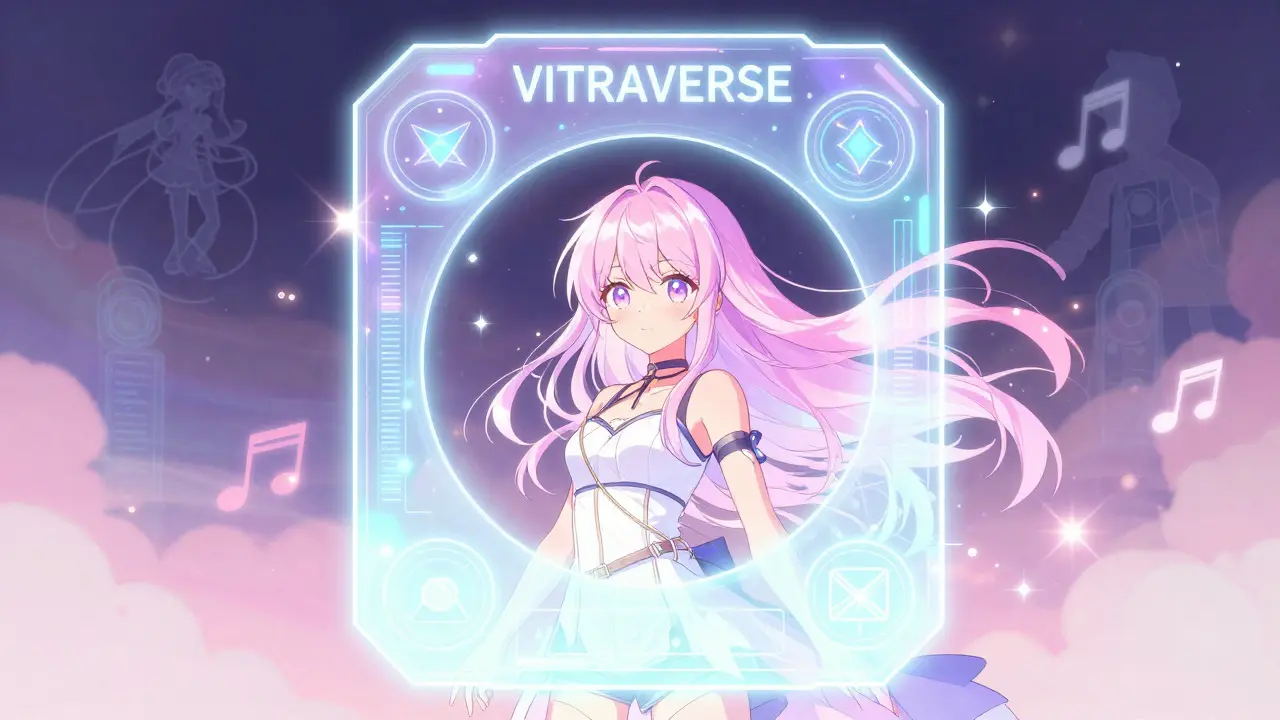
Have you stumbled upon VITRAVERSE (VTRV) and wondered if it’s the next big thing in the metaverse or just another micro-cap experiment? You aren’t alone. With the crypto space flooded with new tokens every day, distinguishing between a genuine utility project and a speculative gamble is tricky. VTRV claims to be the backbone of an entire digital entertainment ecosystem, but does the data back up those bold promises?
In this guide, we’ll strip away the marketing fluff. We will look at what VitraVerse actually is, how its token works on the blockchain, and-crucially-the hard numbers regarding its market performance and risks. Whether you are a curious gamer or a cautious investor, understanding the reality behind VTRV is your first step toward making a smart decision.
The Core Concept: What Is VitraVerse?
VitraVerse is a cryptocurrency token designed to power the Vitra Studios ecosystem, which combines NFT gaming, digital content creation, and metaverse exploration. Think of it not just as a coin, but as a digital key. It is intended to unlock access to games, music, videos, and even tokenized real-world assets within their platform.
The project is driven by Vitra Studios, a blockchain-based company focused on developing NFT games and digital content platforms for PC and mobile devices. Their mission is ambitious: to merge traditional entertainment with the crypto economy. Instead of just playing a game for fun, the idea is that users interact with tokenized assets-like owning a piece of a song or a character in a play-to-earn (P2E) game-and trade them in a decentralized marketplace.
Launched on December 16, 2024, VTRV positions itself as a utility asset. This means its value is theoretically tied to its usefulness within the Vitra Studios universe. If people want to buy in-game items, stake nodes for passive income, or trade digital art, they need VTRV. But here is the catch: utility only matters if there are actual users and products. As of mid-2026, the ecosystem is still in its early stages, which brings us to the technical side of things.
Technical Foundation: BEP-20 and BNB Smart Chain
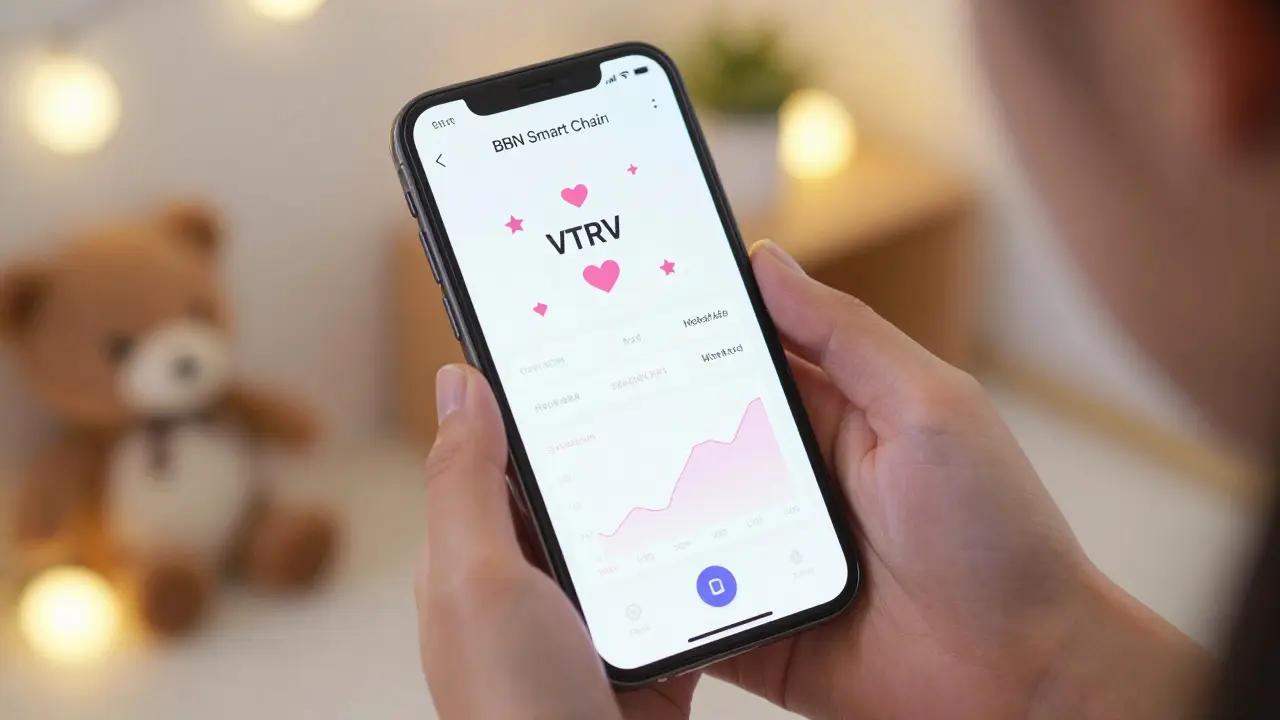
From a technical standpoint, VTRV is a BEP-20 token operating on the BNB Smart Chain network. This is significant for two reasons. First, it means transactions are generally fast and cheap compared to networks like Ethereum Mainnet. Second, it makes the token accessible to anyone using popular wallets like MetaMask or Trust Wallet, provided they switch to the BSC network.
Being a BEP-20 token also dictates how you interact with it. You don’t hold it in a Bitcoin wallet; you need a wallet that supports ERC-20/BEP-20 standards. For trading, this usually means using decentralized exchanges (DEXs) that run on BSC, such as PancakeSwap. The token inherits the security features of the BNB Smart Chain, including its proof-of-staked-authority consensus mechanism, but it’s important to note that no major third-party security audits have been publicly highlighted in primary listings for the specific VTRV contract code.
This lack of visible audit reports is a common trait among newer, smaller projects. While the underlying chain is secure, the safety of your funds depends heavily on the integrity of the smart contract itself. Always verify contract addresses directly from official sources before sending any funds.
Tokenomics: Supply, Fees, and the 'Parity' Claim
Let’s talk numbers, because tokenomics often tell the real story of a crypto project. VTRV has a fixed supply structure:
- Total Supply: 10,000,000 VTRV
- Circulating Supply: 10,000,000 VTRV
- Max Supply: 10,000,000 VTRV
This means 100% of the tokens were released at launch in late 2024. There is no hidden inflation waiting to dump more coins onto the market later. For investors who hate dilution, this is a positive sign. However, a small total supply can also lead to high volatility if liquidity is thin.
Here is where it gets interesting. VTRV applies a 4% transaction fee on every buy and sell. That fee is split three ways:
- 2% goes to Node owners (incentivizing infrastructure).
- 1% goes to NFT owners (rewarding collectors).
- 1% goes to Marketing and Development (funding growth).
While rewarding holders sounds great, remember that this fee reduces your effective capital every time you trade. If you’re actively buying and selling, those fees add up quickly.
There is also a mention of "parity" with another altcoin called VITRA. The documentation suggests a linked value relationship intended to ensure stability within the internal economy. However, the exact mechanics of this parity-whether it’s a 1:1 peg, a redemption rate, or just a conceptual link-are not clearly defined in public listings. This ambiguity requires caution until clearer technical specifications are released.
Market Reality: Price, Volume, and Volatility
If tokenomics are the blueprint, market data is the construction site. And right now, the site is quiet. Let’s look at the hard facts from major trackers like CoinCodex, Binance, and Crypto.com as of May 2026.
| Metric | Value |
|---|---|
| Current Price Range | $0.00555 - $0.00559 USD |
| Market Cap | ~$55,898 USD |
| 24-Hour Volume | ~$17.88 USD |
| All-Time High (ATH) | $0.03181 USD (Aug 5, 2025) |
| All-Time Low (ATL) | $0.003818 USD (Apr 7, 2025) |
| Volatility | 21.93% (Extremely High) |
| Sentiment Score | Bearish / Fear & Greed: 8 (Extreme Fear) |
What do these numbers mean for you? First, the market cap is microscopic. At under $60k, VTRV is a micro-cap asset. This makes it incredibly easy for large trades to move the price significantly, leading to the "extremely high" volatility rating. Second, the trading volume is negligible. With less than $20 in daily volume on some trackers, liquidity is very low. This means if you try to sell a large amount of VTRV, you might face massive slippage-getting much less money than the listed price suggests.
Furthermore, the token is currently trading about 82% below its all-time high. The sentiment is bearish, and the Fear & Greed index is in the "Extreme Fear" zone. This indicates that most market participants are either exiting or avoiding the asset due to uncertainty or lack of recent catalysts.
Where and How to Buy VTRV
If you’ve decided to take the risk, how do you get your hands on VTRV? Since it is not yet listed on major centralized exchanges (CEXs) like Coinbase Pro or Binance Spot, you have to rely on decentralized routes or specific partner platforms.
1. PancakeSwap (Decentralized Exchange): This is the primary method mentioned by CoinMarketCap. You will need:
- A Web3 wallet (like MetaMask) connected to the BNB Smart Chain.
- BNB for gas fees.
- A stablecoin (like BUSD or USDT) or BNB to swap for VTRV.
2. Binance Web3 Wallet: Binance offers a guide on how to buy VTRV through its Web3 Wallet interface. You can fund this wallet with stablecoins from your main Binance exchange account or via external transfer, then use the built-in DEX aggregator to find and trade VTRV pools.
3. Bitrue: Bitrue lists VTRV and offers more than just spot trading. They provide flexible staking options, allowing you to earn interest or returns in other cryptocurrencies by locking up your VTRV. They also occasionally run promotions where users might acquire VTRV for free through yield programs. This could be an attractive entry point for those interested in passive income strategies, though you should always check the current APY and lock-up terms.
Risks and Considerations: The Red Flags
We wouldn’t be doing our job if we didn’t highlight the risks. VTRV is not a blue-chip investment like Bitcoin or Ethereum. Here is what you need to watch out for:
- Liquidity Risk: With such low trading volume, getting in and out easily is difficult. You might find yourself unable to sell when you want to without crashing the price.
- Execution Risk: The project promises a vast ecosystem involving RWA (Real World Assets), video, music, and games. However, as of mid-2026, there is limited public evidence of widespread user adoption or fully launched, robust products. The gap between promise and delivery is wide.
- Transparency Gaps: No individual founders or core developers are publicly named in major listings. The team operates under the umbrella of Vitra Studios. While anonymity isn’t illegal, it adds a layer of trust risk compared to projects with doxxed teams.
- Regulatory Uncertainty: The tokenization of real-world assets and securities-like structures (such as node ownership yielding returns) can attract regulatory scrutiny. Keep an eye on global crypto regulations affecting utility tokens.
Conclusion: Is VTRV Worth Your Attention?
VITRAVERSE (VTRV) represents a bold vision: a unified metaverse where gaming, media, and real-world assets converge. Technically, it functions as a standard BEP-20 token with a fixed supply and a unique fee distribution model. However, the current market reality paints a picture of an early-stage, high-risk asset with very low liquidity and bearish sentiment.
If you are drawn to the concept of NFT gaming and decentralized entertainment, VTRV is worth watching. But treat it as a speculative bet, not a safe harbor. Only invest what you can afford to lose, do your own due diligence on the smart contract, and wait for clearer signs of ecosystem growth and increased trading volume before committing significant capital.
Is VITRAVERSE (VTRV) a good investment?
VTRV is considered a high-risk, speculative asset due to its micro-cap status, extremely low liquidity, and high volatility. It is not suitable for conservative investors. Potential upside exists if the Vitra Studios ecosystem gains mass adoption, but there is no guarantee of success.
Where can I buy VTRV token?
You can currently buy VTRV on decentralized exchanges like PancakeSwap using the BNB Smart Chain. It is also accessible via the Binance Web3 Wallet and supported for trading and staking on the Bitrue exchange.
What is the total supply of VTRV?
The total, maximum, and circulating supply of VITRAVERSE is fixed at 10,000,000 VTRV. All tokens were released at launch in December 2024, meaning there is no future inflation from minting.
Does VTRV have a transaction fee?
Yes, VTRV has a 4% transaction fee on buys and sells. This fee is distributed as 2% to Node owners, 1% to NFT owners, and 1% to Marketing and Development.
Who created VitraVerse?
VitraVerse is developed by Vitra Studios, a blockchain company specializing in NFT games and digital content. Specific individual founders or executives are not publicly identified in major crypto listings.